
Social Work Programs offered at the University of St. Francis
The social work program at the University of St. Francis helps students create meaningful change in society. You’ll learn to serve individuals, families, groups, organizations, and communities while promoting social and economic justice values.
Students can choose from fully accredited social work programs at both undergraduate and graduate levels. The Council on Social Work Education (CSWE) has accredited both the Bachelor of Social Work (BSW) and Master of Social Work (MSW) programs. This recognition means your degree meets national standards and gives you confidence in its quality.
USF’s social work program gives you the knowledge and skills you need to make a difference in social service settings of all types. Students learn culturally conscious leadership and how to serve among diverse populations ethically and competently. The program teaches you to use social work values and evidence-based methods that bring change at every practice level.
The BSW program shapes you into a generalist social worker with a strong dedication to social and economic justice. You’ll know how to reduce suffering from personal disruptions, economic difficulties, and discrimination while boosting your clients’ quality of life in different settings. Liberal arts, social sciences, Catholic intellectual tradition, and charity form the program’s foundation, along with professional social work knowledge, skills, and values.
The MSW program turns you into a change agent working with different client systems. Students become culturally conscious leaders ready to serve diverse populations effectively. The program stands out by offering both in-person and online options with evening and weekend classes that work well for busy professionals.
The MSW program offers two concentration options:
- Advanced Generalist Practice: Students can choose from specialties like child welfare, criminal justice, domestic violence, and immigration. You’ll develop these areas through research, practicum, and elective coursework.
- School Social Work: This concentration prepares you as a mental health professional who supports students and families while connecting with the community. USF has Illinois State Board of Education (ISBE) approval to offer a Professional Educators License (PEL) School of Social Work Endorsement.
USF also offers a Post-Master’s Certificate in School Social Work if you already have an MSW degree from a CSWE-accredited program. The university’s Professional Graduate Certificate in Gerontology helps bachelor’s degree holders understand aging population theory and research better.
Small class sizes make USF’s social work program special. These promote lively discussions and hands-on experiences both in and outside the classroom. Students and faculty build strong relationships in this supportive learning environment.
U.S. News & World Report regularly recognizes the program’s excellence by including the University of St. Francis in rankings like “Best National Universities,” “Best Value Schools,” and “Best Online Programs”.
Graduating from USF means mastering nine essential areas that match social work professional standards. These include ethical behavior, human rights advocacy, anti-racism practices, research-informed work, policy engagement, and effective client system work from assessment through evaluation.
Students often say that learning from diverse classmates and faculty adds great value to their education. This exposure helps them understand social issues better and work effectively in multicultural settings.
USF’s social work graduates do well after school. BSW graduates find entry-level jobs quickly and get into MSW programs, including USF’s own master’s program. MSW graduates gain advanced skills that boost their professional ability, leadership, and career growth.
Social work careers offer many possibilities. The field uses a strength-based approach to improve clients’ lives and create system-wide change. Social workers help at micro levels (individuals and families), mezzo levels (smaller groups), and macro levels (large-scale systemic change).
The job outlook looks promising. The Bureau of Labor Statistics projects 7% growth for social workers by 2032, with about 63,800 openings yearly. These numbers show growing demand for skilled social work professionals in communities of all types.
Where is University of St. Francis located
Located just 35 miles southwest of Chicago, the University of St. Francis sits in Joliet, Illinois. Students enjoy a perfect mix of small-town charm and easy access to one of America’s largest cities. Joliet is Illinois’ fourth-largest city, giving USF social work students plenty of hands-on experience opportunities.
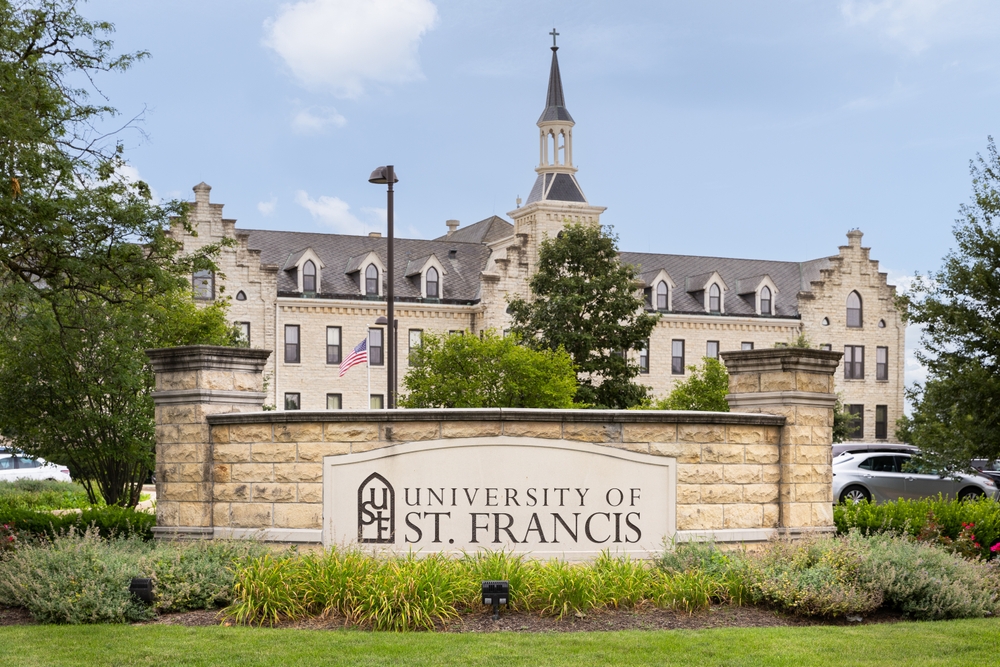
USF’s main campus nestles in the beautiful Cathedral Areas Preservation District, surrounded by Joliet’s most elegant historic homes. This setting creates a perfect environment for social work students to learn and grow. The location combines rigorous academics with ground applications through nearby social service organizations.
The Cathedral of St. Raymond stands within walking distance of the main campus, showcasing the university’s Catholic Franciscan roots. This connection to cultural and religious landmarks adds depth to the educational experience for students in the USF MSW program and undergraduate social work studies.
USF runs three campuses within three miles of each other in Joliet:
- Main Campus – 500 Wilcox Street
- Downtown Campus – 16-18 W. Van Buren Street
- Clare Campus – 1550 Plainfield Road
Students can easily move between these locations thanks to a shuttle service. Social work students find this setup helpful when they have classes or field placements at different sites.
USF reaches beyond Illinois with a satellite campus in Albuquerque, New Mexico at 1500 N. Renaissance Blvd. NE, Suite C. This expansion shows USF’s steadfast dedication to making quality social work education available to students across the country.
Students often describe the main campus as having a “safe, cozy feel” within the historic ‘Cathedral Area’ neighborhood. This relaxed atmosphere encourages a sense of community that works well with social work education’s core values of relationships and community connections.
The main campus puts students just minutes from Downtown Joliet and its Metra station. Social work USF students can quickly reach Chicago and nearby areas for field placements, research, and networking. The downtown campus adds to this urban connection by placing students right in Joliet’s civic and cultural heart.
USF’s location gives social work students several key advantages. Chicago’s diverse urban environment offers countless social service agencies, healthcare facilities, and community organizations for field education and future employment.
Joliet itself opens doors to practical experience. The city faces many social challenges that social workers tackle daily—from healthcare access and economic inequality to community development and family support services.
USF MSW students focusing on school social work can access a variety of educational settings in urban, suburban, and rural communities nearby. This range of school environments helps graduates work effectively anywhere.
The University of St. Francis serves nearly 3,200 students nationwide, with about 1,300 at the main Joliet campus. These numbers allow for small classes while maintaining student diversity—crucial for social work education where different views improve professional growth.
The cathedral neighborhood does more than provide a beautiful backdrop. It serves as a living laboratory for community-based social work. Students participate in neighborhood projects, community organizing, and local social services right outside their classrooms.
Multiple Joliet campuses mean specialized facilities for different aspects of social work education. Core classes happen at the main campus, while specialized training facilities and community partnership centers might operate from the downtown or St. Clare locations.
The nearby Metra station makes commuting easy for students from Chicago and other suburbs. This connection helps USF attract students from all parts of the Chicago metro area who might otherwise struggle to pursue advanced social work degrees.
Online social work students still benefit from these physical campuses. They provide resources, faculty connections, and occasional in-person sessions. Multiple locations give flexibility for hybrid learning that blends online and face-to-face experiences.
While rooted in Illinois, USF’s influence stretches across regions through its New Mexico campus and online programs. This creates a network of social work professionals trained in the Franciscan tradition of service and compassion throughout the country.
The University of St. Francis offers a complete social work education through multiple degree programs and specializations. The Council on Social Work Education (CSWE) accredits all programs. This ensures graduates meet national professional standards for excellence in practice.
Bachelor of Social Work (BSW)
The BSW program helps students become generalist social workers who can work well with people from different backgrounds. This professional degree gives you the skills to get licensure and start practicing right after graduation. Students learn nine essential areas including ethical behavior, human rights advancement, diversity practices, and client engagement.
BSW students spend 480 hours in internships during their senior year at approved social service organizations. They put classroom knowledge into practice under professional supervision. USF works with over 75 social service organizations that provide field placement opportunities.
Students take courses about human behavior in social environments, social welfare policies, research methods, and practice processes. They become skilled at various intervention methods like case management, individual and group counseling, resource development, consultation, teaching, and advocacy.
Master of Social Work (MSW)
USF’s MSW program offers substantially more depth and specialization options for people seeking advanced positions. The program works well for working professionals by offering:
- Evening and weekend classes
- Online and in-person options
- Part-time and full-time study paths
Students need 62 credit hours of coursework, including supervised fieldwork. The program is more available since it doesn’t require GRE test scores. Students with a BSW from a CSWE-accredited program might qualify for advanced standing, which could reduce their credits to 32 hours.
Full-time students usually finish in two calendar years. Part-time students take three to four years. Advanced standing students can graduate in one academic year, which cuts down their completion time substantially.
The MSW program lets students focus their education on specific career paths through specialized concentrations.
Program Concentrations
The MSW program has two main concentrations:
- Advanced Generalist Practice
This concentration creates graduates who can serve people of all backgrounds in many settings. Students learn advanced skills to handle problems at micro, mezzo, and macro levels. They understand how these practice levels work together to solve specific issues.
Students in this concentration can work in:
- Child welfare
- Criminal justice
- Developmental disabilities
- Domestic violence
- Forensics
- Healthcare
- Immigration
- Mental health
- Substance use
- Older adult services
Students must complete 500 field hours in various social service agencies. These placements give hands-on experience to show competence in all ten areas of advanced practice.
- School Social Work
This specialized concentration teaches students to bring unique knowledge and skills to schools. School social workers help with mental health support, behavioral intervention, positive behavioral support, academic assistance, and consultation services for students, families, teachers, and administrators.
The School Social Work concentration needs:
- 400 contact hours of supervised field experience
- 600 contact hours in a school setting internship
The Illinois State Board of Education (ISBE) has approved USF to offer a Professional Educators License (PEL) School of Social Work Endorsement through this specialization. This prepares students for school social work practice in Illinois only.
Certificate Programs
USF also offers certificates for specialized knowledge:
Professional Graduate Certificate in Gerontology
People with bachelor’s degrees in related fields can learn more about gerontology theory and research. They learn to make positive changes in elderly people’s lives and their families.
Post-MSW Professional Educators License
Social workers with an MSW from a CSWE-accredited program can get School Social Work endorsement. This certificate helps practicing social workers move into educational settings.
Field Education Component
Field education is the substance of social work training at USF. The Council on Social Work Education sees field practicum as the “signature pedagogy” of social work education. Students get to:
- Use theoretical knowledge in ground settings
- Build professional relationships with clients and colleagues
- Show competence in required practice areas
- Get personal supervision and guidance
First-year MSW students do supervised fieldwork in generalist practice. Second-year students work in specialized placements that match their concentration. The program doesn’t give social work course credit for life or previous work experience.
Program Distinctions
USF’s social work programs stand out for several reasons. The program structure offers flexibility with multiple entry points and study paths that fit different student needs. Small class sizes create close learning experiences.
The program aims to prepare practitioners for micro, mezzo, and macro level practice. Students develop leadership skills to serve multicultural communities. Graduates learn critical thinking and evaluation skills to become change agents who tackle social welfare concerns, policies, and interventions.
Students can transfer up to six credit hours from other schools. The program starts at different times throughout the year instead of following traditional academic calendars.
USF’s social work programs blend professional education with Franciscan values. This creates practitioners who have both technical skills and ethical foundations. These combined qualities help graduates serve well in complex social environments.
Field education at USF
Field education is the foundation of social work training at the University of St. Francis. Many consider it the “signature pedagogy” in social work education. Students turn their theoretical knowledge into practical skills as they work with real clients in authentic settings under professional supervision.
BSW students must complete 480 hours at an approved social service organization during their senior year. This time commitment gives students hands-on experience with clients at the micro, mezzo, and macro levels using the Generalist Practice Helping Process. Students need a minimum grade of “B-” in their social work classes to qualify for field practicum.
MSW students face more extensive requirements. Those in the Advanced Generalist Practice concentration must complete 500 hours in a variety of social service agency settings. These hours help students develop and showcase advanced generalist practice skills while getting personalized supervision. Students complete their field education over two semesters through Field Practicum and Seminar III and IV courses (SWRK 603, 614).
USF uses a single placement model for field education. Students stay with one agency throughout their field placement experience. While students work with one organization, larger agencies often run various service programs. This setup lets students learn about different departments or specialties.
Students learn from qualified field instructors who meet these criteria:
- BSW field instructors must hold a BSW degree from a CSWE-accredited program
- MSW field instructors must possess an MSW degree from a CSWE-accredited program
- All field instructors need at least two years of post-degree experience
- Instructors should have worked at their current agency for at least one year
Field instructors act as agency-based teaching faculty who shape and oversee student learning. University-based Faculty Field Liaisons support these community-based instructors through face-to-face visits and additional help when needed.
USF’s field education merges classroom learning with hands-on experience. BSW students take part in an integrative seminar alongside their field internship. MSW students also attend professional seminars during their placements. Students write integrative papers that show how they connect curriculum concepts with their field experiences.
The main goal is to create “a professionally reflecting, self-evaluating, knowledgeable, and developing social worker”. USF partners with more than 75 social service organizations that give students real-life learning opportunities. The university’s field education director helps each student find internships that match their learning needs and interests.
BSW students usually attend classes one day weekly and spend about 32 hours at their field placement for 15 weeks. This schedule helps students get valuable experience quickly. The Field Education Program manages all administrative aspects, finds appropriate sites, and trains qualified field instructors.
The School of Social Work buys individual malpractice insurance for each student. Students with criminal histories might need their own coverage. Field instructors must uphold high standards that match the NASW Code of Ethics.
Students experience the full range of social work practice. They apply their knowledge and skills that form the professional foundation. BSW students follow a curriculum designed from a generalist practice view, preparing them as competent practitioners.
Field education shapes students’ professional identity. They take part in supervised direct service activities and get practical experience in all foundation and advanced practice areas. Each site must provide enough opportunities for students to show their skills in meeting objective outcomes.
The Tevera Field Placement Tracking System helps manage the field education process. This system makes coordination between students and field instructors easier while tracking hours, evaluations, and learning contracts.
Agencies and programs in the USF region offer many placement options for bachelor’s and master’s students. The university works with over a thousand field instructors in affiliated human services agencies.
Sites are chosen based on their ability to help students demonstrate competence in all required practice areas. Advanced courses build on previous skills and let students focus on specific practice areas through specialized placements.
Students often say field education is one of their most valuable experiences at USF. This hands-on training builds practical skills and helps students apply classroom learning to real-life challenges. The program prepares them for successful careers serving diverse populations and tackling complex social problems.
What sets University of St. Francis apart?
The USF social work program is known for its excellent education and student support. The University of St. Francis social work programs have full accreditation by the Council on Social Work Education (CSWE). This key credential confirms the quality of both undergraduate and graduate programs. The BSW program has kept this accreditation since 1974, showing that graduates meet national standards for professional practice.
Values-based education is the core of the program’s identity. St. Francis’s social work department follows a clear anti-racism, diversity, equity, and inclusion (ADEI) statement: “Saint Francis University’s Bachelor of Social Work program is committed to cultivating a learning environment rooted in anti-racism, diversity, equity, and inclusion”. This dedication to inclusive practice spreads through the curriculum. Students learn cultural competence to “respect the uniqueness of individual persons” while recognizing “the inherent value in every human person”.
Franciscan values—compassion, humility, and respect for all creation—naturally fit with core social work principles. This blend creates practitioners who have both technical skills and ethical foundations, helping them work better in complex environments. These values go hand in hand with the professional code of ethics set by the National Association of Social Workers.
The USF MSW program’s flexibility makes it special. Working professionals can take evening and weekend classes, with both online and in-person options across the country. The program doesn’t require GRE scores, removing a common hurdle for many future students. Students with BSW degrees might qualify for advanced standing, which can reduce their required credits.
Field education plays a crucial role in the program. Students get hands-on experience through field placements that prepare them for clinical work with different client groups. Students complete 600-900 hours of fieldwork under professional supervision. The Council on Social Work Education calls this hands-on component the “signature pedagogy” of social work education.
Students develop skills in nine key areas:
- Ethical and professional behavior
- Advancing human rights and social, economic, and environmental justice
- Engaging anti-racism, diversity, equity and inclusion in practice
- Practice-informed research and research-informed practice
- Policy practice
- Engagement with various client systems
- Assessment across multiple levels
- Intervention strategies
- Evaluation techniques
Expert faculty supervision and teaching methods make the program excellent. Faculty members bring both academic knowledge and real experience to class. Small class sizes lead to active discussions and practical experiences.
The program’s quality shows in its recognition. The online MSW program has earned several awards:
- Best Online Master’s in Social Work
- Most Affordable Online MSW Programs
- Top 25 Best Fully Online Master’s in Social Work Programs
U.S. News & World Report regularly includes the University of St. Francis in its yearly rankings for “Best National Universities,” “Best Value Schools,” and “Best Online Programs”.
The USF social work programs are affordable. The university offers reasonable tuition rates with good financial aid and scholarship options, making quality education available to more students.
BSW and MSW students develop leadership skills needed for working in multicultural communities. Graduates learn critical thinking and evaluation skills that help them become agents of change in complex social settings. This leadership focus goes beyond technical skills to embrace social workers’ role in supporting systemic change.
The program’s success shows in its outcomes. USF graduates find social work positions quickly. Some programs report 100% of graduates working or in graduate school within nine months. Over 90% of BSW graduates meet advanced standing criteria for master’s programs, letting many finish their MSW in a year or less.
Students get involved in the community through various activities. They join Professional Development Days with seminars about careers and field experiences led by practicing social workers. The Social Work Club and Phi Alpha Honor Society give chances for service and professional growth.
This customized approach to education, based on Franciscan values and meeting professional standards, creates practitioners who can tackle complex social challenges with skill and compassion.
Next steps
The University of St. Francis provides social work education that will transform your ability to help people in a variety of communities and settings. USF distinguishes itself through CSWE-accredited programs, a Franciscan values-based approach, and learning options that work for working professionals. The well-laid-out curriculum combines theory with hands-on experience through field placements.
USF gives you the core skills you need, whether you start with the BSW program or advance your career with the MSW program. You’ll gain expertise in ethical practice, human rights, cultural responsiveness, and client support. Your education can be tailored to your career goals through specialized concentrations in Advanced Generalist Practice and School Social Work.
The university delivers great value beyond academic excellence. Students benefit from affordable tuition, substantial financial aid, and strong job placement rates after graduation. The Chicago-area location opens up diverse field placement options while you retain the advantages of a close, supportive campus community.
You’ll join a tradition of developing culturally aware leaders who champion social and economic justice as a USF social work student. Small classes help build strong connections with faculty who bring both academic knowledge and real-world experience. This individual attention and high professional standards create the perfect setting to grow into a caring, skilled social work practitioner.
The University of St. Francis combines quality education, shared values, and professional preparation to help launch your career in social work. Your time at USF will enhance your professional opportunities and your ability to create positive change for people, families, and communities throughout your career.