Social Work Programs offered at Rockford University
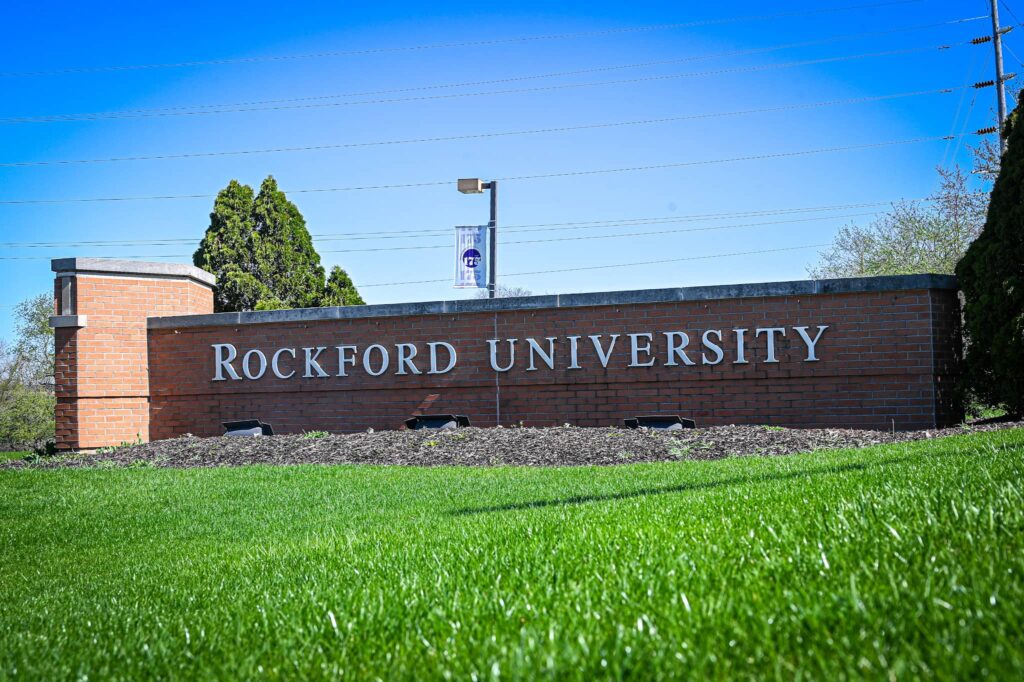
Rockford University is a private four-year, co-educational institution with roots going back to 1847. You’ll find this academic hub at 5050 East State Street in Rockford, Illinois, where it offers a wide range of undergraduate and graduate degrees in liberal arts and professional fields.
The social work program at Rockford University gives students the skills to help individuals, families, and groups with their social welfare needs through thorough generalist training. Students learn to understand people in their social context and get hands-on experience through practicum placements and internships.
The social work program sits in the Department of Political Science, Sociology, Criminal Justice, and Social Work. This program stands out because it prepares students to tackle social welfare needs in our society. The department creates an environment where ideas flow freely. Students develop their critical thinking abilities, learn to express themselves clearly, and master academic research – skills they’ll use throughout college and their careers.
Students can pick between a Bachelor of Arts (B.A.) or Bachelor of Science (B.S.) in social work. This choice helps them align their education with their career goals. The program also opens doors to stable jobs in a high-demand field. It helps reduce the shortage of social workers while serving people who need support in the region.
Rockford University’s educational offerings go well beyond social work. The university has:
- More than 80 majors, minors, and concentrations
- Bachelor’s degree completion programs in management studies and accounting studies
- Graduate programs including Master of Business Administration (MBA), Master of Arts in Teaching (MAT), and Master of Education in Urban Education (M.Ed.)
The university is working toward accreditation through the Council on Social Work Education. The Bachelor’s in Social Work program will be accredited by 2027, and students who graduate before then will receive retroactive accreditation.
Academic excellence shines at Rockford University. It hosts one of just 11 Phi Beta Kappa (PBK) chapters in Illinois – America’s most prestigious honor society. The Princeton Review names it a Best Midwestern College, and U.S. News & World Report ranks it as a Best Midwest Regional University. Recent data shows about 1,250 full-and part-time students call Rockford University home.
The social work program has two main goals: preparing students to help individuals and families while understanding broader social policy needs. Graduates can work directly with clients and shape the systems that affect them.
Students get more than just social work training. The program’s place within the political science, sociology, and criminal justice department gives them insights into related fields. This broader view helps them understand complex social issues better.
Modern social work education needs to look at people in their social context. The program teaches students about individual psychology and behavior while considering social, economic, political, and cultural factors that shape human experience.
Rockford University creates knowledgeable, skilled, and ethical social work professionals. Students get both rigorous academics and practical field experience. This combination prepares them to make real changes in their communities.
The university’s location gives students unique opportunities. They can work in urban, suburban, and rural settings around Rockford, Illinois. This variety helps them learn to work with different populations and in various social service settings.
Where is Rockford University located
Rockford University sits at 5050 E. State Street, Rockford, IL 61108, right in the heart of Rockford, Illinois. The private university blends urban convenience with suburban peace in its city setting.
The 160-acre campus has plenty of room for academic buildings, student housing, and recreation areas. Students pursuing various programs, including social work, enjoy an intimate campus atmosphere with extensive facilities and resources.
Located just 90 miles northwest of Chicago, the university gives students a strategic advantage. They can tap into Chicago’s rich cultural, professional, and educational opportunities while enjoying Rockford’s relaxed pace and affordable living costs. Social work students benefit from experiencing both urban and suburban settings during their field placements.
The campus strikes a perfect balance between city and suburban life. Though it’s in Illinois’ third-largest city, the park-like grounds create a unique identity. Social work students thrive in this environment as they learn about different community contexts.
The university creates a close community atmosphere with its residential focus. Fall 2024 data shows 981 undergraduate students, allowing for small class sizes and individual attention. This setup works great for relationship-focused programs like social work.
Rockford itself becomes a learning ground for many programs. The largest Illinois city outside Chicago offers students access to diverse populations, community groups, and social service agencies. Social work students gain valuable experience through local practicums and field work.
The campus location hasn’t changed since its early days, even as the institution grew. Starting as Rockford Female Seminary in the 1840s, it became Rockford College in 1892 and finally Rockford University in 2013. Through these changes, the campus remained a key educational hub in Rockford.
The Midwestern setting shapes the university’s practical, community-focused approach to education. Students benefit from:
- Different practice settings from urban areas to suburban communities
- Many healthcare facilities, social service agencies, and community organizations nearby
- Strong connections with local employers looking for graduates
- Lower living costs compared to Chicago
Social work students find unique opportunities in Rockford. The city deals with challenges common to mid-sized industrial towns – economic changes, shifting demographics, and varied social needs create real learning experiences. Students put their classroom knowledge to work during field education.
The 160-acre campus balances specialized facilities with green spaces. Students get the focused environment they need while having room to reflect – key aspects of social work education.
Rockford’s population of 147,000 makes it perfect for hands-on learning. Social work students can easily travel to field placements and conduct community assessments throughout the area.
Beyond Chicago, students can reach other major Midwestern cities like Madison, Wisconsin and Milwaukee. This opens up career opportunities across the upper Midwest for social work graduates.
The university’s setting serves as a practical training ground for developing professional skills. Students connect classroom concepts with local needs through community partnerships, service-learning, and field placements.
The campus actively engages with surrounding communities rather than standing apart. This matches social work’s focus on understanding people in their environment and working with community systems to create positive change.
The university continues to grow, but its location remains its biggest asset. A defined campus community in a mid-sized city near Chicago creates unique advantages, especially for students heading into community-focused careers like social work.
Rockford University’s undergraduate social work program lets you choose between a Bachelor of Arts (B.A.) or Bachelor of Science (B.S.) degree. You can pick the path that best matches your career goals and interests.
The social work program will teach you to help people with their social welfare needs. You’ll get solid training that helps you understand people in their social environment. The program gives you skills to work with individuals, families, and groups through a mix of classroom learning and real-world experience.
Program Structure and Objectives
Rockford University has created its Bachelor’s in Social Work program to prepare you for both direct service and policy work. The curriculum blends theory with hands-on practice. The program wants to:
- Get you ready to help individuals, families, and groups with social welfare needs
- Give you skills for a stable career with high job demand
- Help reduce the shortage of social workers in the area
- Support underserved populations with their psychosocial needs
The university knows how vital social workers are to society. The program has started its accreditation process with the Council on Social Work Education (CSWE) and will be accredited by 2027. Here’s good news – if you finish the program before accreditation, your degree will be retroactively accredited once approved.
Complete Curriculum
You’ll need 38 credits in core courses plus at least 3 credits from elective options to complete the social work program. Here are the core courses:
| Course Code | Course Title | Credits |
| SWRK 101 | Introduction to Social Work | 3 |
| SWRK 110 | Human Behavior & Social Environment I | 3 |
| SWRK 140 | Diverse Pops Pluralistic Societies | 3 |
| SWRK 160 | Social Welfare Policy | 3 |
| SWRK 175 | Intro Substance Use & Addictive Disordrs | 3 |
| SWRK 210 | Human Behavior & Social Environment II | 3 |
| SWRK 225 | Research Methods | 3 |
| SWRK 250 | Social Work Practice I | 3 |
| SWRK 350 | Social Work Practice II | 3 |
| SWRK 410 | Field Instruction I | 4 |
| SWRK 420 | Field Instruction II | 4 |
| SWRK 495 | Senior Seminar | 3 |
You’ll also need to take one 3-credit course from options like child and adolescent psychopathology, aging, cross-cultural interaction, psychology of women, brief interventions for helping professionals, race and ethnic relations, social class in America, or sociology of gender.
On top of that, we suggest taking Introduction to Psychology (PSYC 100) and Introduction to Sociology (SOCI 150). These courses will build a stronger foundation for your social work education.
Professional Competencies
Your studies will help you become skilled at nine essential competencies set by the Council on Social Work Education. These competencies cover the knowledge, values, skills, and processes you’ll need for effective social work:
- Demonstrate Ethical and Professional Behavior
- Advance Human Rights and Social, Racial, Economic, and Environmental Justice
- Engage Anti-Racism, Diversity, Equity, and Inclusion (ADEI) in Practice
- Engage in Practice-Informed Research and Research-Informed Practice
- Engage in Policy Practice
- Engage with Individuals, Families, Groups, Organizations, and Communities
- Assess Individuals, Families, Groups, Organizations, and Communities
- Intervene with Individuals, Families, Groups, Organizations, and Communities
- Evaluate Practice with Individuals, Families, Groups, Organizations, and Communities
These skills will give you a well-rounded foundation for various social work roles.
Interdisciplinary Connections
The social work program is part of the Department of Political Science, Sociology, Criminal Justice, and Social Work. This setup creates great chances to learn from related fields and boosts your understanding of social systems.
The program’s home department shows its core approach – linking social work practice with broader social science concepts. This viewpoint helps develop your critical thinking, communication skills, and research abilities needed for success.
Career Preparation and Pathways
You’ll get ready for professional practice through a mix of classroom learning and hands-on experience in practicum placements and internships. This combination gives you both knowledge and practical skills.
After graduation, you can work in many settings where social workers are needed. The program helps meet the region’s workforce needs by training qualified social workers.
Rockford University also offers the Social Worker Opportunity Tracks (SWOT) program with different paths for students interested in human services or social work degrees. This includes the SWOT Pipeline Track for high school students and the SWOT Immediate Track for Winnebago County school staff.
Students in other majors can add a social work minor to learn the basics of social work principles and practices. This option lets you add valuable knowledge about human behavior and social welfare systems to your main field of study.
The program also opens doors for further education. Graduates can apply to online master’s degree programs in social work, creating a clear path for career growth.
Field education at RU
Field education is the foundation of professional preparation in Rockford University’s social work program. Students get more than just classroom theory. These hands-on learning experiences connect academic concepts with real-life application. This creates well-rounded social work professionals ready to enter the workforce.
Rockford University’s social work curriculum combines practicum placements with internships. Students become competent social workers through extensive exposure to authentic practice settings. Many programs offer limited field experiences, but Rockford’s complete model will give you substantial practical knowledge throughout your academic experience.
Structure of Field Education
The Bachelor’s in Social Work program blends classroom education with resilient field education components. Students can apply theoretical concepts in supervised settings step by step. You’ll develop practical skills that employers value while learning academic content.
Your field education follows a natural progression. Original experiences focus on observation and simple skill application. You’ll move toward more complex interventions as you advance through the program. This supported approach builds your confidence and competence together.
Rockford University’s Career Connection team helps create meaningful field experiences. Team members guide you personally when you’re ready to check out internship options. These internships may or may not carry academic credit based on program requirements and your educational goals, according to university policy.
Students can choose between paid positions and those focused on professional development. You can select experiences that match your financial situation and career goals best.
Specialized Programs and Partnerships
Rockford University students have an excellent chance to join the Rockford Youth Career-readiness Ecosystem (RYCE) program. The College of Professional and Extended Learning will provide employment readiness training to students in three distinct cohorts during a 12-month project period (April 1, 2025, to March 31, 2026).
This program is known because of its dual placement model. Students get internship placements at both Rockford University and partner organizations in the community. These experiences are a great way to get networking opportunities that often lead to job offers after graduation.
Alignment Rockford exemplifies the many organizations that work together with the university to create meaningful internships. Their RYCE participant testimonial shows how these partnerships benefit everyone: “We are so grateful for your hard work, bright ideas, willingness to learn a lot in a short time, and then to create and build with your own ideas”. Field partners consistently praise Rockford University students’ contributions.
Practical Benefits of Field Education
The field education component helps achieve a key goal of the social work program—preparing you for stable employment in a high-demand field. These experiences help you:
- Develop essential professional competencies required by the Council on Social Work Education
- Build a professional network within the social services community
- Identify your preferred practice settings and specialization areas
- Compile a portfolio of real-world experience for future employment applications
- Gain exposure to diverse populations and social contexts
Most students get their first real taste of professional social work practice through field education. These experiences often confirm career paths and strengthen professional identity. Field placements let you test theoretical knowledge in real situations and develop confidence for independent practice.
Integration with Academic Learning
The university connects classroom knowledge with field experience in its social work education approach. Many courses include service-learning components that link academic content with community participation. These smaller experiences complement formal practicums and internships.
Every student should gain career experience through strong internship opportunities, whatever their major. Social work students find these experiences especially valuable because they directly support the program’s focus on understanding individuals within their social contexts.
Field experiences act as testing grounds where you apply and refine classroom skills. You’ll bring real-world questions and insights back to class that deepen your understanding of course concepts. This ongoing cycle of application and reflection makes social work education work.
Real-World Impact
Field education at Rockford University focuses on addressing real community needs. The social work program aims to ease the shortage of qualified professionals while helping underserved populations with their psychosocial needs. Your field experiences will make a real difference in these efforts.
Students often say field education transforms their social work education most powerfully. Real cases challenge you more than hypothetical ones. You’ll develop essential critical thinking skills through these challenges.
Rockford University believes effective learning happens beyond traditional classrooms. Students tackle real-world problems under professional guidance. Social work students develop interpersonal skills and professional judgment that classroom instruction alone can’t provide.
Field education achieves multiple goals: meeting academic requirements, preparing you for employment, serving community needs, and building your professional identity. These experiences set you up for success in a field that values practical skills alongside theoretical knowledge.
Rockford University keeps field education central to its educational approach as it develops its social work program toward CSWE accreditation. You’ll graduate with supervised practice experience that proves you’re ready for professional responsibilities.
What sets Rockford University apart?
The College of Social Sciences, Commerce, and Education (SSCE) at Rockford University has several distinctive programs that make it unique among its peers. The university creates an educational environment that blends theoretical knowledge with hands-on application in a variety of disciplines.
Students develop critical-thinking and problem-solving skills through the liberal arts tradition that serve them well in their careers. Rockford University shines with its focus on customized education paths.
Rockford’s faculty members bring both real-world experience and deep academic knowledge to their classrooms. While many institutions prioritize research over teaching, Rockford’s educators put student learning first while staying active in research and community service. They focus on teaching and help students create customized paths to reach their career goals.
The Social Worker Opportunity Tracks (SWOT) program is one of Rockford University’s most innovative offerings. A $2 million grant from the Winnebago County Community Mental Health Board helps county residents get social work education through financial and academic support. SWOT students receive:
- Two years of free tuition at Rockford University
- Additional funding for textbooks
- Detailed wrap-around services
Rockford University graduates can also get financial support to complete the University of Illinois Urbana-Champaign online master’s of social work degree. This creates a smooth path from associate degrees through graduate education.
Over the years, Rockford University has become a central hub for social work education in the region. Students from any Winnebago County high school can join the SWOT Pipeline Track and move into either Rock Valley College’s associate program in human services or straight into Rockford’s bachelor’s in social work program.
The university added a Bachelor of Science in Human Services to its Degree Completion program. This new degree helps meet the community’s growing need for human services professionals. Working professionals can complete their education through flexible eight-week courses.
The university’s accreditation sets it apart in the academic world. It holds accreditation from the Higher Learning Commission and belongs to prestigious groups like the Association of American Colleges and the Council of Independent Colleges. Rockford is among just 11 colleges in Illinois and 286 nationwide with a Phi Beta Kappa chapter—the oldest and most prestigious liberal arts academic honor society.
Working professionals can earn degrees in management studies and accounting studies along with the new human services option through the Bachelor’s Degree Completion program. Traditional students can choose from more than 80 majors, minors, and concentrations.
Rockford University shows its steadfast dedication to community growth through its social work education. Students learn to address social welfare needs, which helps ease the shortage of qualified social workers in the region. Quality education combined with meeting real community needs creates value for both students and society.
Rockford University gives aspiring social work professionals a great mix of academic excellence, hands-on experience, financial support options, and clear career paths.
Next steps
Want to start your social work studies at Rockford University? The university reviews applications on a rolling basis. You’ll get your decision within two business days after submitting all required materials.
Application Process
Rockford University gives you two easy ways to apply to the social work program. You can submit your application through the university’s online portal. Undergraduate students can also use the Common Application platform. The process is efficient and works with your priorities.
First-year undergraduates need to have their official high school transcripts sent straight to Rockford University. Transfer students must submit official transcripts from their previous colleges and universities. They also need high school transcripts if they have fewer than 12 college-level credits.
Financial Considerations
Students should submit their Free Application for Federal Student Aid (FAFSA) before enrolling. Remember to use Rockford University’s FAFSA code: 001748. This step is vital to determine your eligibility for grants and scholarships.
Academic Requirements
Rockford University expects you to meet specific academic standards during your studies. Graduate students must keep a 3.00 GPA in all required coursework. Undergraduate programs have similar standards to maintain academic excellence.
Students work with an advisor to create a signed Plan of Study. This plan must be on file before you can register for certain courses. Your customized plan will help you complete all degree requirements on time.
Beyond Graduation
A Bachelor’s in Social Work opens many doors. Graduates find stable jobs in hospitals, schools, mental health centers, hospice facilities, youth services, criminal justice centers, substance abuse programs, and non-profits.
Rockford University graduates can also apply to the University of Illinois Urbana-Champaign’s online master’s of social work degree. This creates a smooth path to advanced education if you don’t enter the workforce right away.
High school students, transfer students, and working professionals looking for a career change will find a clear path to success in Rockford University’s social work program. The program is on track for CSWE accreditation by 2027, with retroactive accreditation for earlier graduates. Your degree will carry recognized professional credentials anywhere your career takes you.