Social Work Programs at Lewis University
Lewis University’s Department of Social Work prepares students to boost social and economic justice and improve life quality for individuals, families, groups, and communities in urban and suburban settings. The department works under the College of Education and Social Sciences and offers complete programs that give you the skills and knowledge to excel in the field.
The social work programs at Lewis University accept new ideas through their Catholic and Lasallian heritage. They use a person-in-environment framework with a global point of view. This foundation values every person’s dignity and promotes shared work, service, and social justice—values that line up with social work practice. Students receive education and resources they need to boost social functioning and well-being in a variety of populations.
Program Accreditation and Standards
Lewis University’s undergraduate and graduate social work programs are accredited by the Council on Social Work Education (CSWE). This accreditation will give a curriculum that meets national standards and readies students for professional practice. The department expects all graduates to achieve nine core competencies:
- Demonstrate ethical and professional behavior
- Involve diversity and difference in practice
- Advance human rights and social, economic, and environmental justice
- Involve in practice-informed research and research-informed practice
- Involve in policy practice
- Involve with individuals, families, groups, organizations, and communities
- Assess individuals, families, groups, organizations, and communities
- Intervene with individuals, families, groups, organizations, and communities
- Assess practice with individuals, families, groups, organizations, and communities
These competencies create the foundation of the curriculum and help students build their professional identity and skills for effective social work practice.
Bachelor of Arts in Social Work (BASW)
The undergraduate social work program helps students serve various populations and advance human rights. Students learn to value human relationships, think critically, and understand research in practice. The curriculum combines theoretical knowledge with field experience and evidence-based practice skills based on social work ethics.
Students start with general education courses and progress to learn about diversity, ethics and values, human development, interventions, and research. Graduates can apply for social work licensure in the State of Illinois.
Lewis University partners with Joliet Junior College and the College of DuPage to offer flexible education options. Students can complete their first two years at either institution before finishing their degree at Lewis University’s main campus in Romeoville.
Master of Social Work (MSW)
The MSW program offers 60 credit hours to prepare students for clinical settings. Students learn mental health services, therapy, counseling, clinical case management, and other direct practice skills. The program focuses on evidence-based practice and social justice, giving practitioners complete skills to work in complex, changing practice environments.
Students can finish the MSW in two years full-time or four years part-time. They apply theory in ground circumstances through two clinically supervised internships. Credentialed social work professionals mentor students to think and solve problems like social workers.
The MSW program helps students:
- Promote programs and services that ensure social and economic justice
- Develop advanced interpersonal practice skills
- Boost skills for developing social functioning
- Blend theoretical and research concepts from multiple perspectives
- Develop creative responses to complex issues
- Model ethical and professional behaviors in a global and diverse society
Career Outlook
The U.S. Bureau of Labor Statistics Employment Projections program shows that career opportunities in social work will grow by 9% from 2021 to 2031. This is a big deal as it means that the average for all occupations, suggesting strong demand for qualified social workers. Graduates work in various settings, including:
- Homelessness and housing services
- Substance abuse treatment and prevention
- Violence prevention programs
- After-school programs
- Senior services
- Services for persons with disabilities
- Early childhood education
Extracurricular Opportunities
Lewis University offers many activities and organizations outside the classroom. Social work students can maximize their experiences and build connections with peers. These opportunities boost professional development and create valuable networking connections in the field.
Lewis University’s social work programs combine classroom learning, field experience, and extracurricular involvement to create competent, responsible professionals. Graduates can effectively handle complex social issues while maintaining the highest ethical practice standards.
Where is Lewis University located
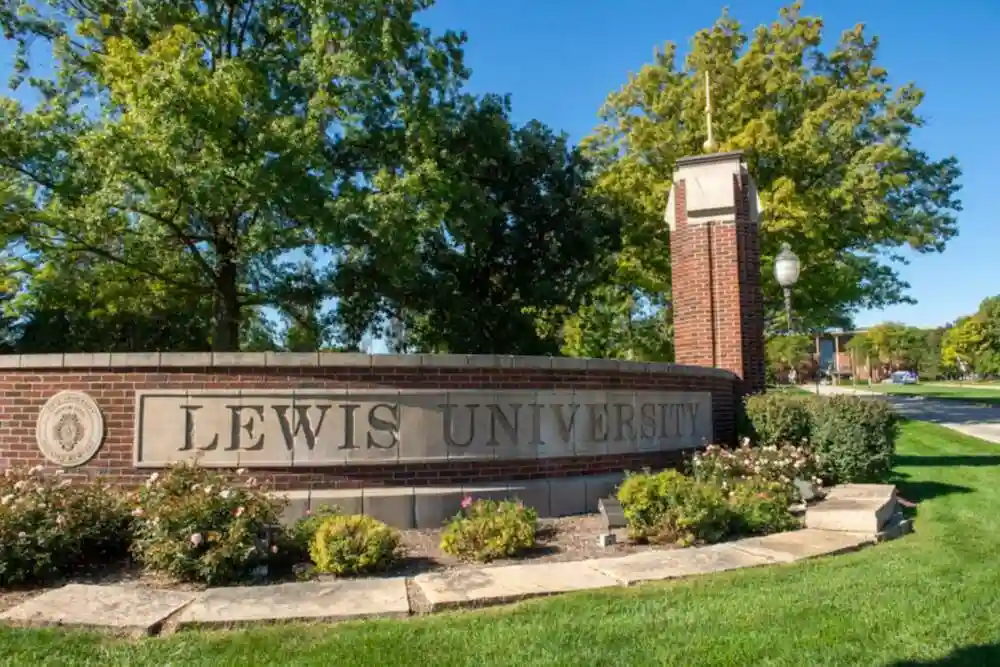
Lewis University’s beautiful main campus spans more than 410 acres in Romeoville, Illinois. Students can find it 35 miles southwest of Chicago. Students working toward social work degrees benefit from this perfect spot – they’re close enough to enjoy Chicago’s culture, social scene, and job opportunities while studying in a peaceful suburban setting.
Main Campus Address and Contact Information
You can reach Lewis University’s main campus at:
Lewis University
One University Parkway
Romeoville, IL 60446
Phone: (815) 838-0500 or toll-free (800) 897-9000
Most academic programs run from this location, which is home to undergraduate social work students. Twelve residence halls house about 1,300 students. Students can easily walk to all campus facilities – classrooms, library, Student Recreation and Fitness Center, Student Union, and Sancta Alberta Chapel from their dorms.
Additional Campus Locations
Lewis University has several locations beyond the main Romeoville campus:
- Oak Brook Campus
1111 W. 22nd St., Suite 700
Oak Brook, IL 60523
Oak Brook focuses on evening classes, adult education, and graduate programs including social work. Students here have access to 15 classrooms, modern nursing simulation labs, 15 ‘outpatient’ offices, a student lounge, conference rooms, and computer labs.
- Albuquerque Campus
Students can find this campus on the east side of New Mexico’s largest city. Popular programs here include Business Administration, Computer Science, and Criminal Justice. - Chicago Campus
Lewis University partners with St. Augustine College to serve underrepresented students in Chicago. Social work students interested in urban settings find this location ideal. - Rome, Italy
Students looking for international exposure can join the Lewis University Rome Program at LUCE. They live at the Lasallian Universities Center for Education (LUCE) in the Generalate, where De La Salle Christian Brothers have their motherhouse. - Lewis Online
Students who need flexibility can choose fully online programs or mixed online and face-to-face formats. Social work students can complete their coursework from anywhere.
Getting to the Main Campus
Here’s how to reach the Romeoville campus:
- From Chicago: Take I-55 (Stevenson Expressway) south to Weber Road. Head south on Weber Road to Renwick Road. Turn left (east) on Renwick Road until you reach Route 53. Turn left (north) on Route 53. You’ll see the main campus half a mile ahead on the left at the stoplight.
- From East/West: Take I-80 to Route 7 Larkin Avenue exit in Joliet. Go north on Larkin (it becomes Weber Road) to Renwick Road. Turn right (east) on Renwick Road, go to Route 53, then turn left (north). Look for the campus entrance at University Parkway half a mile ahead on the left at the stoplight.
- From Northwest: Take I-355 south to I-55, then go south on I-55 to Weber Road. Follow the Chicago directions from there.
Campus Environment and Educational Philosophy
Lewis University creates spaces where students think critically and use their knowledge to build a better society. This approach works great for social work students who focus on social justice and community improvement.
Multiple campus options show Lewis University’s dedication to being accessible to all students. You can choose the rich resources at the main campus, convenient evening courses at Oak Brook, an urban setting in Chicago, or flexible online learning.
Lewis University helps future social workers get quality education no matter where they live or what their schedules look like. The main campus’s proximity to Chicago lets social work students work with different communities and social service agencies, giving them valuable hands-on experience.
Lewis University offers excellent social work programs that prepare you for helping professions. These programs blend rigorous academics with field experience to equip graduates who can serve people from all backgrounds in many settings.
Bachelor of Arts in Social Work (BASW)
The undergraduate social work degree at Lewis needs 48 major credit hours within a 120-credit hour bachelor’s program. This BASW program qualifies you for social work licensure in Illinois right after graduation. Your studies will help you develop critical thinking skills, value human relationships, and learn to use research in practice.
Students must keep a minimum 2.75 GPA and earn at least a “C” in introductory courses to declare a social work major. The application needs personal statements and recommendation forms from previous instructors by October 1 each year.
The program needs 12 core courses (36 credit hours) plus 9 credit hours of electives. Core coursework has:
- Introduction to Social Work
- Cultural Humility and Social Power
- Human Behavior in the Social Environment
- Social Welfare Policy and Analysis
- Diagnosis in the Social Context
- Ethics and Professional Issues
- Social Work Practice with Individuals
- Social Work Practice with Families and Groups
- Crisis Intervention
- Social Action in Practice
- Social Work Practicum and Seminar (two semesters)
- Research and Evaluation in Social Work
The program also offers specialized electives so you can focus on specific interests or career goals. These courses cover chemical dependency, loss and mourning, services for children and adolescents, services for older adults, child welfare, and working with immigrants and refugees.
Master of Social Work (MSW)
The MSW program requires 60 credit hours to prepare you for clinical settings that provide mental health services, therapy, counseling, and case management. This graduate program focuses on evidence-based practice and social justice principles to give you detailed practice skills for complex environments.
You can finish the MSW program in two years full-time or four years part-time. The program has two clinically supervised internships totaling 1,080 hours where you’ll apply theory in ground settings with guidance from credentialed professionals.
Your foundation year covers the Generalist Practice Model with skills that work across populations and settings. The advanced clinical year lets you pick a population focus (child/adolescent, adult, or older adult) and build specialized practice skills.
Students with a bachelor’s degree in social work can choose the Advanced Standing option. This faster track needs only 30 credit hours and takes one year full-time or two years part-time. You’ll need a 3.0 overall GPA and a 3.0 social work GPA from your undergraduate program.
Sample MSW courses include:
- Social Justice and Empowerment: Oppression, Privilege, and Diversity
- Social Welfare Policy and Services
- Psychodynamic Theory
- Advanced Individual Practice with Adults
- Advanced Policy: Children and Adolescents
- Cognitive Behavioral Therapy
- Treatment of Substance Abuse
After finishing the MSW program, you’ll know how to create programs for social and economic justice, develop advanced interpersonal practice skills, combine theoretical concepts from multiple viewpoints, and model ethical behaviors in a global society.
Social Work Minor
Lewis University also has a Social Work minor that pairs well with other degrees. This option gives students from any field valuable skills in understanding human behavior and social systems while staying focused on their main studies.
Program Accreditation
The Council on Social Work Education (CSWE) Commission on Accreditation has accredited both the Bachelor’s and Master’s Social Work Programs at Lewis University. This recognition shows the programs meet national standards and graduates can get licenses and advanced standing opportunities.
Career Opportunities
Lewis’s social work programs open doors to many career paths. MSW graduates often work in:
- Hospitals
- Rehabilitation centers
- Hospice facilities
- Mental health centers
- Child welfare agencies
- County health departments
- Senior services
- Behavioral health hospitals
Bachelor’s graduates typically find jobs in:
- Homelessness and housing services
- Substance abuse treatment and prevention
- Violence prevention programs
- After-school programs
- Services for persons with disabilities
- Early childhood education
Transfer Partnerships
Lewis University’s mutually beneficial alliances with Joliet Junior College and the College of DuPage create smooth educational paths. You can study at either school for two years and finish your degree at Lewis University’s main campus in Romeoville.
Note that the Department of Social Work keeps high academic standards and doesn’t give social work course credit for life experience or previous work. This rule makes sure all graduates have the educational foundation to provide quality services.
Lewis University’s social work programs stand out by combining academic excellence, hands-on experience, and steadfast dedication to social justice principles. These programs give detailed preparation to make meaningful contributions to individuals and communities in need, whether you want an undergraduate degree, graduate studies, or just want to enhance your current profession with a minor.
Field education at Lewis
Professional social work education at Lewis University has field experience as its foundation. You’ll learn to apply classroom theory in real-life situations. Your social work experience at Lewis includes structured field placements where you’ll turn abstract concepts into practical skills with guidance from experienced professionals.
The Foundation of Field Education
Lewis University’s field instruction follows educational standards set by the Council on Social Work Education (CSWE). These standards are a great way to get the knowledge, values, and skills needed for competent practice. Students work directly with people who need help with daily living challenges. The classroom instruction comes alive when theories, concepts, and principles become meaningful practice skills.
A good field placement gives you chances to work professionally with people at every level – individuals, groups, families, organizations, and communities. You’ll also take part in field seminars that help you connect theory, coursework, and practice. This combination helps you solve problems responsibly when addressing social welfare needs.
Detailed Hour Requirements
Each program level has specific field education requirements to ensure proper experience:
- Bachelor of Social Work (BSW) students complete 480 hours of field work in one placement over fall and spring semesters.
- First-year MSW students similarly complete 480 hours in one field placement spanning fall and spring.
- Advanced Standing and Second-year MSW students undertake 600 hours of field work in one placement over fall and spring semesters.
- Full-time MSW program students complete two field placements throughout their two-year program: 480 hours in the Foundation year followed by 600 hours in the advanced clinical placement.
- Part-time MSW program students also complete two placements totaling 1,080 hours (480 + 600) over their four-year program, with placements occurring in their second and fourth years.
Students pursuing School Social Work concentration must meet state licensing requirements. They need to complete a year-long internship in a school setting. A school social worker with a current Professional Educator License (PEL) supervises this internship.
Field Education Structure and Process
The semester before field education begins, placement procedures start. You’ll work with the field director to find appropriate agencies for interviews. Your schedule gets arranged between you and the agency field instructor once placed. Some placements might require you to have a car.
First-year field placements help you apply simple knowledge and skills within generalist practice. You’ll learn to assess, intervene, and evaluate client progress. First-year MSW students should pick placements outside their desired career specialization to gain broader experience.
Advanced standing and second-year MSW placements focus on clinical specializations with specific population tracks. You’ll provide direct practice and clinical social work services to develop specialized expertise. These placements need you to be available during standard business hours.
Companion seminar courses run alongside your field education. They help you connect practical experiences with theoretical foundations. School social work students take specialized seminars (SCWK 617/618) that cover social workers’ roles in school settings, including direct service, consultation, advocacy, and program development.
What sets Lewis University apart?
Lewis University’s social work programs stand out because they blend academic excellence with Lasallian values. The programs prepare practitioners who master technical skills and understand ethical responsibilities. Students learn more than just the basics – they discover their role in making society better.
Values-Centered Education
Lewis University weaves its Catholic and Lasallian heritage into every aspect of social work education. The program’s goals line up with the university’s five core values: fidelity, knowledge, association, wisdom, and justice. These values naturally complement social work’s professional standards. Students learn technical skills while developing strong ethical principles.
Both undergraduate and graduate students learn through a person-in-environment framework with a global viewpoint. This helps them see clients as whole people and understand how broader social systems affect human wellbeing.
Distinguished Faculty Expertise
The faculty’s excellence gives Lewis University students an edge. Social Work Department educators stay active in advancing their profession beyond teaching. Dr. Lorri McMeel serves on the Child and Adolescent Social Work Editorial Board for three years. Dr. Ellen Thursby works with the Infant & Early Childhood Mental Health & Developmental Neuroscience Task Force.
Teachers regularly share their expertise at conferences. Dr. Thursby and Dr. Michael Lloyd presented their research about how students perceive learning in integrative field seminars. This ongoing professional work helps students learn from the latest developments.
Unique Scholarship Opportunities
The university offers two special scholarships for graduate students in behavioral health and social work:
- The Behavioral Health Workforce Education and Training (BHWET) Program gives $10,000 scholarships to graduate students studying mental health fields, including social work. Students get field placements in community organizations that help underserved groups, especially children and adolescents.
- The Joliet-Leader Program helps graduate social work or school counseling majors. It develops leaders who can tackle complex social issues. Students receive financial help plus leadership training, community service projects, and guidance from experienced professionals.
These programs offer more than standard merit-based awards – they prepare students for specific social work careers.
Detailed Theoretical Foundation
Lewis’s curriculum excels with its full theoretical base. It combines current research with evidence-based practice skills rooted in social work ethics and cultural awareness. Students become critical thinkers who adapt to complex situations.
Every course teaches the NASW Code of Ethics, with practice courses using case studies to explore ethical challenges. This integrated approach creates graduates who can direct complicated professional situations with integrity.
Student Experiences
Students often talk about how Lewis University changed their lives. An MSW candidate called her field placement at Guardian Angel Community Services “one of the most rewarding experiences of my life so far.” She noted how the organization’s mission matched social work values perfectly. Another student praised her internship at Amita:Alexian Brothers Behavioral Health Hospital. She learned specialized skills in Cognitive Behavioral Therapy and Exposure Response Prevention.
U.S. News & World Report ranks the social work program #289 among graduate schools. This national recognition proves the program’s quality. Graduates start their careers with degrees from a respected institution.
Yes, it is Lewis University’s integrated vision that makes its social work education special. The program creates practitioners with technical skills, ethical awareness, and dedication to helping diverse populations while promoting human rights and social justice.
Next steps
Are you ready to start your social work experience at Lewis University? Your path to becoming a social work professional starts with a well-laid-out application process that fits your educational background and career goals.
Application Process
You’ll need to figure out which application type matches your situation:
- First-Year Undergraduate Applicants – High school students can apply through either the Lewis Application or Common Application platforms.
- Transfer/Adult Undergraduate Applicants – Students previously enrolled at another college should use the dedicated transfer application, whatever credits they’ve earned.
- Graduate Applicants – Future MSW students need to complete the graduate application form.
- International Applicants – Students who need a student visa or live in the USA with a student visa should use the international application process.
Submit all necessary transcripts and supporting documents after choosing the right application. Notwithstanding that, some programs have specialized admission requirements you’ll need to meet during the application process.
Program-Specific Requirements
The Bachelor of Arts in Social Work requires you to maintain a minimum cumulative GPA of 2.75. You must earn at least a “C” in fundamental courses like Introduction to Social Work, Cultural Humility and Social Power, and Human Behavior in the Social Environment. The Program Director must receive BASW program applications by October 1 each year.
Undergraduate students should prepare a complete application package that has:
- The application form
- A personal statement
- Two recommendation forms from previous course instructors
The Master of Social Work program offers a standard 60-hour course of study. Students can finish this in two years full-time or four years part-time. Your availability and professional commitments should guide your choice between these options.
Students with a bachelor’s degree in social work might qualify for the Advanced Standing program. This option needs an overall GPA of 3.0 and a social work GPA of 3.0. Students can complete this accelerated 30-credit-hour program in one year full-time or two years part-time.
Transfer Partnerships
Students interested in the 2+2 program can apply for dual enrollment at both College of DuPage and Lewis University.
Note that the Department of Social Work doesn’t grant course credit for life experience or previous work experience. Every student must complete the educational requirements, regardless of their professional background.
Students must maintain specific GPA standards to stay in good standing – undergraduates need a minimum 2.75 cumulative GPA, while graduate students must maintain a 3.0 GPA.
Students should complete all MSW program requirements within seven years of finishing their first graduate course at Lewis University. A break in attendance for two or more consecutive years means following the catalog requirements in effect upon return.
Starting your social work degree at Lewis University opens doors to a rewarding career. You’ll help others while promoting social justice principles that line up with the university’s mission.