Social Work Programs at DePaul University
Looking to build a career in social justice and community service? DePaul University Social Work programs provide thorough preparation in a distinctive Vincentian, urban setting.
DePaul University’s social work program has risen substantially in national rankings. The program moved from 103rd to 88th in the U.S. News & World Report for Best Schools of Health Disciplines—Social Work as of 2019. The Master of Social Work (MSW) degree program prepares students for advanced social work practice, with specializations in community practice and forensic social work.
The program adapts to your schedule with flexible completion options. Students can complete 88 quarter credit hours, which includes 24 hours of field education, in two years full-time or three to four years part-time. DePaul’s Social Work Minor requires 20 quarter credit hours through five courses and welcomes Junior-level students.
The program’s commitment to social justice within a Vincentian framework makes DePaul University’s social work experience truly distinctive.
Where is DePaul University located?
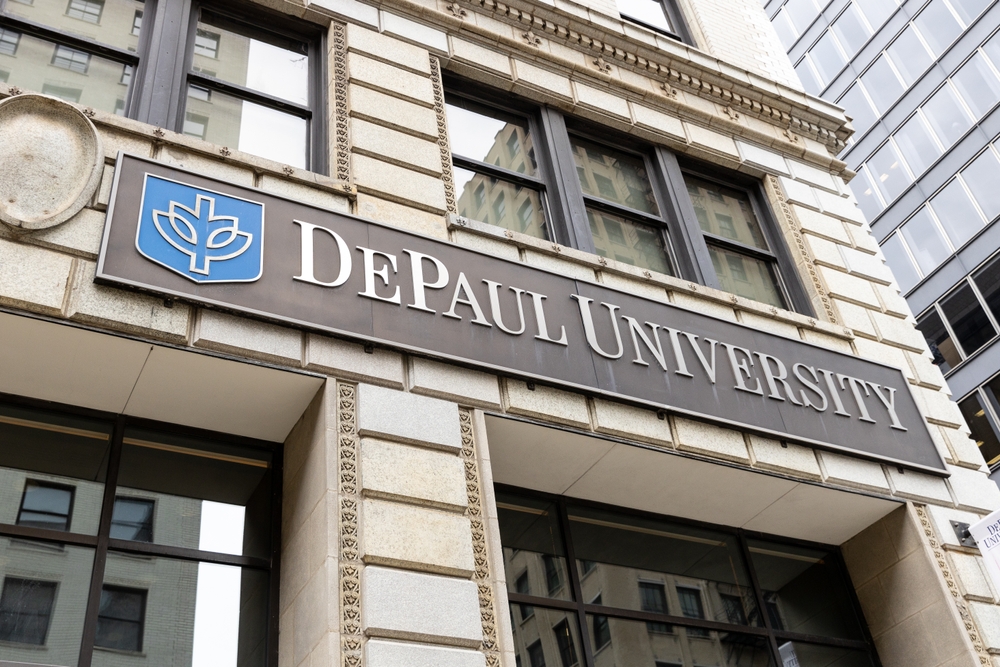
DePaul University spans two unique Chicago locations that give students an urban educational experience beyond regular classrooms. The university’s dual-campus setup creates unique advantages for students in various fields, especially those studying social work.
Lincoln Park Campus: The Traditional University Setting
The Lincoln Park Campus is DePaul’s main hub, spanning 36 acres (14.57 ha) in Chicago’s historic Lincoln Park neighborhood. Students experience a traditional university atmosphere with a quad and full campus facilities. Social work students benefit from academic resources and community connections they need for field education.
The campus sits just north of downtown Chicago, creating an interesting mix – a traditional college setting within a bustling urban environment. This residential and retail-focused neighborhood borders Lake Michigan and features a massive park that could fit 900 football fields. Social work students can easily reach diverse communities and potential fieldwork sites in this vibrant district.
The Lincoln Park Campus houses five of DePaul’s colleges and schools:
- College of Education
- College of Liberal Arts and Social Sciences (home to many social work programs)
- College of Science and Health
- School of Music
- The Theater School
Visitors and future students can park at the Clifton Parking Deck at 2330 N. Clifton Ave, where validated tickets offer discounted rates.
The Loop Campus: Downtown Urban Experience
The Loop Campus sits in Chicago’s main business district along Jackson Boulevard, from State Street to Michigan Avenue. Students find themselves at Chicago’s professional core, with quick access to internships, networking, and ground experience – valuable assets for social work students preparing for urban careers.
The elevated train tracks circle this area, giving the Loop its name. Students can easily reach their classes and everything downtown Chicago offers. Lake Michigan, the Art Institute of Chicago, the Chicago Board of Trade, and countless cultural landmarks stand within walking distance.
The Loop Campus hosts five DePaul colleges and schools:
- Driehaus College of Business
- College of Law
- School of Continuing and Professional Studies
- College of Communication
- Jarvis College of Computing and Digital Media
DePaul Center at 1 E. Jackson Blvd., Chicago, IL 60604 serves as both the Loop Campus hub and the university’s official mailing address.
Accessing Both Campuses
Chicago’s extensive public transit network makes both campuses highly available for everyone:
Lincoln Park Campus Transportation Options:
- CTA Trains: Three rapid transit lines serve the Lincoln Park area through the Fullerton station: Howard and 95th/Dan Ryan (Red), Linden/Loop (Purple), and Kimball/Loop (Brown) lines.
- Busses: Several routes stop near campus.
- Divvy Bike Sharing: Multiple stations around campus offer eco-friendly travel options.
Loop Campus Transportation Options:
- CTA Trains: Seven rapid transit lines serve downtown, with exits at Jackson Boulevard and Adams Street/Wabash Avenue.
- Busses: Many routes stop near the Loop Campus.
- Metra Trains: All stations sit within walking distance or a short cab ride, including Union Station, Chicago & Northwestern Station, LaSalle Street Station, and Illinois Central Station.
- Divvy Bike Sharing: Several stations operate near the Loop Campus.
Chicago: The Extended Campus
DePaul University’s special character comes from its integration with Chicago. The entire city becomes a college town rather than having an isolated campus. Students often can’t tell where campus ends and city begins.
America’s third-largest city serves as an extended classroom for DePaul students. The “Windy City” showcases stunning architecture, professional sports, and entertainment venues. Social work students gain access to diverse communities, social service agencies, healthcare systems, and advocacy organizations – a perfect setting to apply classroom knowledge.
DePaul’s central Chicago locations give students quick access to internships and jobs at Fortune 500 companies and innovative startups. Social work students find this especially helpful for field placements and professional networking.
Navigating Between Campuses
Chicago’s public transit makes moving between Lincoln Park and Loop campuses simple. Brown and Red Line trains connect both locations directly. Students can take classes or join activities at either campus easily. This setup lets everyone use DePaul’s full resources, no matter which campus they call home.
Benefits for Social Work Students
The dual-campus structure creates unique advantages for social work program students. Lincoln Park Campus offers a supportive academic community for theory and research work. The Loop Campus puts students close to social service agencies, government offices, healthcare facilities, and community organizations – perfect for field placements and networking.
Chicago’s diverse neighborhoods give social work students exposure to different populations and social challenges. This hands-on experience matches DePaul’s Vincentian mission of social justice and community service.
Vincentian Heritage in an Urban Context
DePaul’s Chicago location strengthens its Vincentian heritage and mission. The Vincentians founded the university, and its urban setting helps fulfill its commitment to addressing social issues and serving diverse communities. Social work programs thrive in this environment, preparing students to tackle urban challenges while following Vincentian values.
Each campus shows a different side of DePaul: Lincoln Park offers traditional college life with green spaces, while the Loop immerses students in professional urban culture. Together, they create a complete educational environment that balances academic tradition with practical experience – exactly what social work education needs.
Future social work students at DePaul gain significant advantages from the dual-campus structure and Chicago location. These settings provide practical experience and community connections needed for successful social work careers, beyond just academic excellence.
DePaul University’s MSW degree program provides a complete social work education that balances theory with practical application. This 2005-old program reflects DePaul’s steadfast dedication to service, justice, and giving chances within a Vincentian, Catholic, and urban framework. Students build professional ethics, respect for human rights, and recognition of human dignity—these are the foundations for advanced social work practice.
Graduates leave ready to work and lead in a variety of human service organizations. Their expertise spans child welfare, health and mental health, community planning, family services, and related fields. Students must complete 88 quarter hour credits, with 24 hours dedicated to field education.
Program Flexibility and Format
Students can choose from multiple ways to complete the MSW program:
- Full-time: Two years to completion
- Part-time: Three or four years
DePaul’s Loop Campus hosts classes on weekday afternoons and evenings. This schedule makes shared learning possible while students manage their professional and personal lives.
Three Distinct Concentrations
Students can tailor their education through three concentrations. Each path builds specific skills for different social work careers:
- Community Practice Concentration
Leaders of human service organizations emerge from this concentration. Students master program evaluation, fund development, and community-oriented approaches to social service. The focus stays on organizational leadership, community participation, and systems-level interventions.
Required courses include:
- Program Evaluation
- Fund Development and Management
- Community Practice I, II, and III
- Community Field Education I, II, and III
- Forensic Social Work Concentration
Students learn to practice and advocate where human services meet the legal system. This track provides specialized knowledge to work with justice-involved populations and navigate complex legal contexts.
Required courses include:
- Program Evaluation
- Fund Development and Management
- Forensic Social Work Practice I, II, and III
- Forensic Field I, II, and III
- School Social Work Concentration
School social workers need theoretical, analytical, and practical skills. This concentration addresses educational settings’ unique challenges and trains professionals to support students’ social-emotional needs.
Required courses include:
- School Social Work Policy and Practice I, II, and III
- School Social Work Field Education I, II, and III
- Psychology and Education of the Exceptional Child
- Language, Literacies and Cultures
Curriculum Structure
Students progress from foundational knowledge to specialized practice. The program requires:
- 11 foundation courses that establish core social work competencies
- 9 concentration-specific courses, including field placements
- 2 elective courses that let you customize your education
Foundation content covers professional writing, human behavior, social welfare policy, social work research, and beginning practice skills. Advanced courses take a closer look at concentration-specific knowledge including program evaluation, fund development, and advanced practice methods.
Field Education Component
Real-life application happens through field education. Students complete two field experiences with Chicago-area agencies. These daytime placements connect students with organizations like:
- Catholic Charities
- AIDS Foundation of Chicago
- Friedman Place
- DePaul Family and Community Services
Supervised field experiences give hands-on practice with diverse populations and professional mentorship. This experiential learning bridges theory and practice, preparing students for their careers.
Certificate Opportunities
DePaul’s graduate certificate programs offer ways to expand your MSW degree with specialized knowledge. These certificates help you focus on complementary disciplines that boost social work practice.
Students can explore these combinations:
- MSW + Global Health Certificate
- MSW + Social Research Certificate
- MSW + Critical Ethnic Studies Certificate
Certificate programs need separate applications. Your academic advisor can help determine which courses count toward both programs.
Dual Degree Option
DePaul offers a 3-year MSW/MA in Women’s and Gender Studies dual degree program. This path combines social work practice with specialized knowledge of gender issues and feminist theory.
Students must meet admission requirements for both Women’s and Gender Studies and Social Work programs separately. This dual degree creates unique career paths at the intersection of social work and gender advocacy.
Concentration Requirements
Each concentration needs 32 credit hours of specific courses. Students develop broad social work competencies and specialized skills for their chosen practice area.
Community Practice students focus on organizational leadership and community-based interventions. The program has eight courses including Program Evaluation, Fund Development and Management, Community Practice I-III, and Community Field Education I-III.
Forensic Social Work students complete eight required courses: Program Evaluation, Fund Development and Management, Forensic Social Work Practice I-III, and Forensic Field I-III.
School Social Work students take eight courses: School Social Work Policy and Practice I-III, School Social Work Field Education I-III, Psychology and Education of the Exceptional Child, and Language, Literacies and Cultures.
Educational Philosophy
Students, agencies, and the university partner together in DePaul’s MSW program. This shared approach creates a curriculum that prepares students for lifelong learning while modeling progressive social work practice. The program’s goals focus on ethical practice within a Vincentian, Catholic, and urban institution.
Rigorous coursework, field placements, and community participation shape skilled social work professionals. DePaul graduates lead in various settings, carrying forward the university’s commitment to social justice and service.
Field education at DePaul
DePaul’s social work training stands out through hands-on experience in structured field education. This approach creates a natural connection between classroom theory and practice. MSW degree students see field education as more than a requirement – it builds their professional identity and competence.
DePaul uses a well-laid-out model that needs students to complete two academic-year long placements at social service agencies. Students must earn 88 quarter hour credits, with 24 hours going to field education. This extensive field work shows DePaul’s steadfast dedication to learning by doing as the substance of social work education.
Students build their skills through foundation-level and advanced internships. Full-time students in their first year (or part-time students in their second year) complete MSW 491, 492, and 493 (Foundation Field Education I, II, and III). Each course gives them 4 credit hours. Later, they take field education courses that line up with their chosen specialty track.
Students starting their first internship need to complete a minimum of 540 contact hours at an approved social agency. This means about two full days each week during fall, winter, and spring quarters. The second internship focuses on advanced practice in forensic social work or community practice. It needs at least 580 contact hours – about two and a half days weekly for three academic quarters.
The Council on Social Work Education (CSWE) reduced field hours during COVID-19. Foundation students needed 400 hours and advanced students needed 500 hours in the 2021-2022 academic year. Regular requirements are back in place now.
Foundation and advanced internships have different placement processes. Foundation students rank their preferred agencies, and the field coordinator reaches out to these places starting with their top choice. Students send resumes and cover letters to hiring managers after getting permission. If interested, the sites conduct interviews. This continues until they find the right match.
Advanced internships work a bit differently. Students pick three potential organizations. The field coordinator sends their application to these places. Students then interview and get matched based on mutual agreement.
Students who don’t get placed after three agency interviews or application reviews might need to see the Professional Review Committee. This could lead to removal from the MSW program.
The field education experience comes with several practical points:
- Scheduling Requirements: Most internships happen during weekday hours. Some places offer evening and weekend hours, but students must be free on weekdays during both internship years. Part-time students need this availability in their second and fourth years.
- Employment-Based Field: Students who have worked at a social service agency for at least a year can do one field placement at their workplace. They need approval from the Field Education Coordinator. They must work in a different department, with new supervision, and different duties.
- Transportation Considerations: A car helps, but Chicago’s public transit makes most field sites available. MSW students get the CTA U-pass for unlimited public transit during the academic year, except winter intersession.
- Compensation: Most internships don’t pay, though some places give money back for required driving. Students should plan for unpaid work since stipends rarely happen.
Students take practice courses and field education seminars along with their field work each quarter. This helps classroom learning support their field experiences. Full-time MSW students begin looking for placements right after admission. Part-time students start this process in their first year’s fall quarter.
Field education at DePaul helps students grow professionally through supervised practice. Qualified field instructors guide students, watch their progress, give observation chances, lead case conferences, and plan learning activities. MSW faculty members connect the university with field sites. They track student progress and grade work based on agency supervisor input.
DePaul works with many respected agencies for field placements. Students can intern at places like Catholic Charities, AIDS Foundation of Chicago, Friedman Place, and DePaul Family and Community Services. These partnerships create learning environments in agencies of all sizes where students use their knowledge to build practical skills.
DePaul Family and Community Services gives special externship chances to MSW second-year and advanced-standing graduate students. These positions focus on helping children and teens, with experience in mental health assessments, diagnosis, and therapy. Spanish speakers get extra encouragement to apply for these roles, which include guidance from a bilingual Licensed Clinical Social Worker.
DePaul also offers externships in its own programs. MSW students can apply to work in DePaul’s treatment foster care program or independent living apartment program. Selected interns get MSW field instruction and supervision that matches their educational goals. They shadow, observe, and work directly with clients alongside DePaul staff.
Graduate internships in DePaul’s Community Based Services program give rich experiences. Students work with licensed and license-eligible clinical staff to help individuals and families directly. They might provide Intensive In-Home counseling, Family/Parent Engagement services, or teach life skills to youth in the juvenile justice system. Licensed supervisors (LCSW or LPC) oversee all services, and students usually get Virginia Board of Counseling QMHP-Supervisee status before starting.
DePaul University’s field education connects academic knowledge with professional practice. Students become effective, ethical social work practitioners through structured experiences and supervision. They develop skills, judgment, and professional identity needed for successful social work careers.
What sets DePaul University apart?
DePaul University’s social work program is different with its Vincentian tradition. The program offers a unique experience that goes beyond typical academic courses. Built on helping marginalized communities, it has several standout features that help future social work professionals.
Small cohorts are one of the program’s best features. Students take classes in small groups that help them build close bonds with classmates. They also get tailored attention from their professors. This creates a supportive learning environment where everyone’s voice matters and individual needs get addressed—quite different from the big, anonymous classes at many other schools.
DePaul’s program has earned more recognition lately, climbing from 103rd to 88th in the 2019 U.S. News & World Report rankings for Best Schools of Health Disciplines—Social Work. This rise shows the program’s growing excellence and dedication to quality education.
Job numbers tell the real story of the program’s success. Recent data shows that 86% of Social Work graduates found jobs, continued studying, or pursued other goals within six months after graduating. These numbers show how well the program prepares students for their careers.
DePaul’s social work faculty bring amazing dedication to their work. They don’t just teach—they actively work in the community. Here are some examples:
- Associate Professor Neil Vincent helped start Chicago Survivors, which helps families affected by violence
- Associate Professor Sonya Crabtree-Nelson helps students work with the Neighborhood Legal Assistance Program. They provide case management and free legal help to homeless and formerly homeless Chicagoans
These teachers show how the program links classroom learning with real community work. Their involvement in solving social issues creates great learning chances for students.
The curriculum makes this program special too. A graduate said it best: “The DePaul MSW program provided me with a well-rounded social work education. The MSW faculty encourage class discussions and participation that allows for consideration of diverse points of view”. Teachers use current events and pop culture to explain theories, which helps students think critically beyond textbooks.
The program keeps faculty-to-student ratios low to make mentoring and support easier for all students. This personal touch stays throughout their education and creates lasting connections that continue after graduation.
Students excel in academic work too. Many have published papers and presented their research, which shows how the program values both academic excellence and practical skills.
DePaul social work students get access to an amazing network. Graduates work with MSW alumni across Chicago at places like AmeriCorps, Boys & Girls Clubs of Chicago, and Ann & Robert H. Lurie Children’s Hospital of Chicago. Students can also tap into DePaul’s bigger network of over 180,000 alumni, which opens up great career paths.
The Vincentian mission spreads through every part of the program and gives a framework for both academic and hands-on training. The DePaul University MSW Program “extends the university’s global Vincentian mission of service to marginalized groups, particularly those in the Chicago urban community”. This creates an education that prepares students not just to work, but to serve meaningfully.
Chicago’s location adds real value to the program. The city has hundreds of social service agencies and nonprofits. Through partnerships, students get hands-on experience in areas they care about. This urban setting lets students apply what they learn to complex social challenges.
The program carefully balances theory and practice. The curriculum is “grounded equally in theory and practical application”. Students learn skills they can use throughout their careers, not just in their first jobs.
DePaul’s MSW program, established in 2005, shows “another example of the university’s special commitment to service, justice, and opportunity”. The program has grown through partnerships between students, agencies, and the university. Together, they’ve created a curriculum that prepares students for lifelong learning while showing progressive social work practice.
Students who want to learn about social work will find DePaul offers academic excellence, personal attention, community connections, and values-based learning. The program works as an educational community committed to “rigorous, personalized, and responsive education”. Students develop both professional skills and personal purpose—exactly what they need for meaningful social work careers.
Next steps
DePaul University offers an excellent social work education rooted in Vincentian values. With two Chicago campuses, students get unmatched access to different communities, field placements, and professional networks that help build ground expertise.
The program’s national ranking has jumped from 103rd to 88th, showing its rising quality. An impressive 86% of graduates find jobs right after completing their degree. Students can finish their degree full-time in two years or part-time in three to four years, depending on their schedule.
Students can focus on Community Practice, Forensic Social Work, or School Social Work to match their career goals. Each path blends classroom learning with field experience. Students complete 24 credit hours across two year-long placements and turn theory into practice under expert supervision.
Small class sizes at DePaul create a close-knit learning environment where professors know each student by name. Students build strong bonds with faculty members who work actively in communities. These professors serve as both teachers and mentors throughout their educational trip.
DePaul’s social work program goes beyond basic academic training. Vincentian principles of service and justice are woven into every course. Students don’t just learn social work concepts – they become part of a community that tackles urban challenges and speaks up for underserved populations.
Choosing DePaul for social work education means joining a program where academic excellence meets hands-on experience and social justice values. The mix of specialized knowledge, practical training, and personal attention prepares students for more than just a job. They learn to make lasting changes in the communities they serve.