
Social Work Programs offered at Bradley University
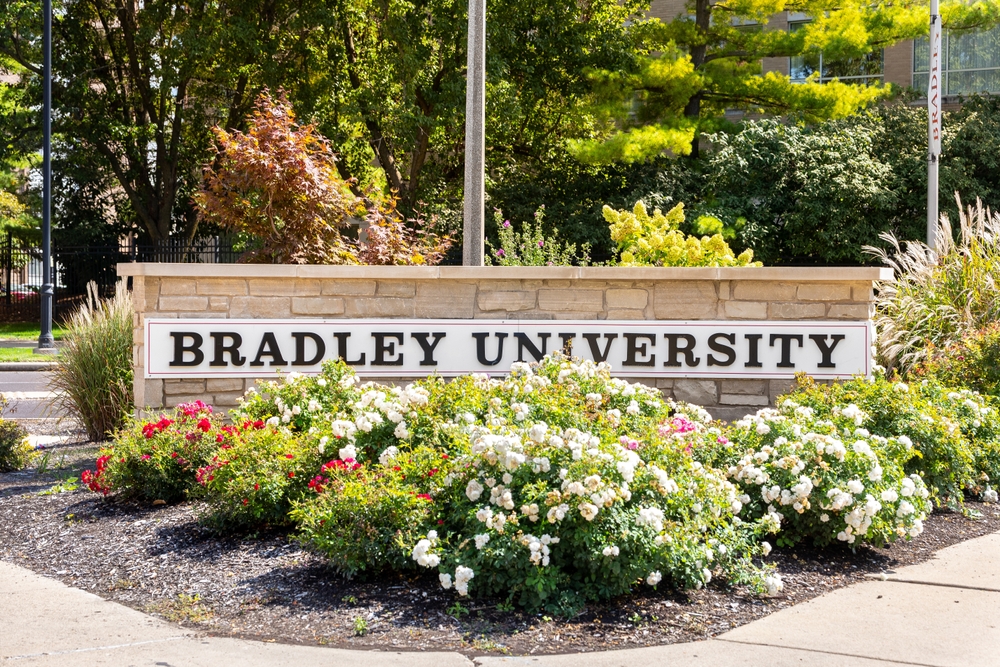
Bradley University’s social work program prepares students to create positive change in their communities. The program builds on core values like service, social justice, human dignity, relationships, integrity, competence, human rights, and scientific research.
The Council on Social Work Education accredits Bradley’s program, which gives students the skills they need to help people in a variety of settings. Students learn to work with individuals, families, groups, organizations, and communities through practical training.
Statistics show Bradley University awarded 22 bachelor’s degrees in social work during 2021-2022. Women made up 86% of graduates, while men accounted for 14%. These numbers showed a 21% drop from the previous year’s 28 degrees. White students represented about 55% of all graduates.
Part-time undergraduate tuition at Bradley costs $1,039 per credit hour for all students, regardless of residency, as of 2022-2023. Bradley graduates earn a median salary of $36,017. This figure falls slightly below the national average of $37,334 for social work graduates.
The program sits within the Department of Sociology, Criminology, and Social Work. A talented team leads the department: Associate Professor Saleeby (Chair and Director), Professor Hogan, Assistant Professor Amos, and Instructor in Residence Tarter. These experts bring their knowledge and experience straight to students.
Students can choose between BA and BS degrees in social work. The 69-credit curriculum includes:
- 21 hours of liberal arts requirements
- 42 hours of social work requirements
- 6 hours of electives
Students learn theory and practice together. The curriculum covers social welfare policy, human behavior theories, social work research, and core practice skills. Students also complete hands-on training through field work.
Junior year students must apply for admission to start their professional practice component. Field work requires 420 hours at an approved community agency. Students need a 2.25 GPA to graduate and must earn at least a “C” in all social work courses.
Learning goes beyond the classroom. The program lays groundwork for graduate studies in social work and related fields. Recent graduates work at AmeriCorps, Catholic Charities USA, children’s homes, city governments, and healthcare systems. Others pursue advanced degrees at schools like Case Western Reserve University, University of Illinois, University of Michigan, and University of Wisconsin.
Bradley’s unique approach emphasizes critical thinking and research. Students become skilled at working in today’s global environment. The liberal arts foundation helps them understand and tackle complex social issues.
The program serves as a stepping stone to accelerated Master of Social Work (MSW) programs. Many graduates gain advanced placement in MSW programs nationwide.
Students can transfer practice sequence courses, human behavior courses, and field practicum only from CSWE accredited programs. Life experience or previous work cannot replace social work curriculum courses.
Bradley provides resources like the Social Work Research Guide to help students find information, research articles, books, and proper citation methods. These tools help develop strong research and practice skills simultaneously.
Where is Bradley University located
Bradley University sits right in the heart of Illinois at 1501 West Bradley Avenue, Peoria, IL 61625. This prime spot creates amazing opportunities for social work students to gain field experience, connect with the community, and build professional networks.
The beautiful campus covers about 84-85 acres. You’ll find it on Peoria’s west bluff, where it offers stunning views just minutes from downtown. Social work students can quickly reach various agencies, healthcare facilities, and community organizations for their hands-on training.
The university’s location gives social work students a real edge. Students can reach Chicago, St. Louis, and Indianapolis in just three hours. This central spot lets them explore social work opportunities in major cities. They also get experience working with different communities in urban, suburban, and rural areas.
Getting to Bradley is easy, even from far away. The university runs shuttle services to most cities. The Peoria International Airport lies less than 30 minutes from campus, making travel simple for out-of-state and international social work students.
The campus nestles in a peaceful residential neighborhood. Students enjoy plenty of restaurants and shops nearby when they take breaks from their studies. Beautiful public art installations add a cultural touch to the area.
Bradley University’s location offers these key benefits for social work students:
| Location Benefit | Relevance to Social Work Education |
| Proximity to downtown Peoria | Easy access to agencies, hospitals, and community organizations for field education |
| Central position in Illinois | Exposure to diverse communities and social issues across urban and rural settings |
| Three-hour distance from major cities | Opportunities to explore social work practices in metropolitan areas |
| Residential neighborhood setting | Safe environment with convenient amenities for focused learning |
Bradley’s story began in 1897. This private, independent university has grown into a complete educational hub while staying true to its community roots. The social work program benefits from strong ties with local partners and field placement sites built over many years.
Peoria’s vibrant arts and culture scene adds depth to social work education. Students learn about different viewpoints and community resources. These experiences help them develop cultural awareness – a must-have skill in social work.
The campus layout creates a tight-knit community. Everything stays close together instead of spreading across the city. This setup helps social work students build strong bonds with their teachers and classmates. They get the support they need for their challenging coursework and field training.
The location makes field work much easier. Most placement sites lie just minutes from campus. Students spend less time commuting and more time learning.
Bradley University’s Peoria location strikes the perfect balance. Students stay close to city resources while enjoying a focused learning environment. This setting gives social work students everything they need – professional connections and solid education – to succeed in their field.
Bradley University’s Department of Sociology, Criminology, and Social Work offers complete degree paths to help you become a social worker. You can choose between Bachelor of Arts (BA) and Bachelor of Science (BS) degrees in social work. This choice lets you align your education with your career goals.
The Council on Social Work Education has fully accredited these undergraduate programs. You’ll get ready for meaningful careers through a well-laid-out curriculum that combines theory and hands-on experience. This accreditation means your degree meets national professional standards – a vital factor when you look for jobs or head to graduate school.
Bradley’s social work programs stand on core values. These values include service, social justice, human dignity, relationships, integrity, competence, human rights, and scientific research. They shape how courses are designed and taught.
The bachelor’s program needs 69 credit hours split into three parts:
- 21 hours of liberal arts requirements
- 42 hours of social work requirements
- 6 hours of electives
This setup gives you both wide knowledge and deep expertise. Liberal arts courses build your understanding of context, while social work courses develop your professional skills. Electives let you focus on areas that interest you most.
Bradley’s hands-on learning opportunities extend beyond regular classes:
- Community-Based Projects – You can join initiatives like the Gimme Shelter program that helps people understand housing insecurity
- Research & Conferences – You’ll cooperate with faculty on peer-reviewed publications and share your work at professional conferences
- Group & Leadership Training – You’ll gain practical skills through planning, support group leadership, and work with local social agencies
The program covers everything you need to work effectively. Your studies include social welfare policy, human behavior theories, social work research, and practice skills. These courses blend CSWE competencies and dimensions (knowledge, skills, values, cognitive and affective processes). This blend helps you develop all the qualities needed for professional success.
Bradley’s field practicum makes its social work programs stand out. You’ll complete a minimum of 420 field hours in an approved community agency. This experience lets you use what you’ve learned while working under professional guidance. You can work in schools, hospitals, child welfare organizations, and community agencies, seeing different areas of practice.
You’ll need formal admission during your junior year before starting professional practice courses. This step makes sure you’re ready for advanced training. The professional practice sequence combines specialized courses with field experience.
The program has high academic standards. You need an overall grade point average of 2.25 to earn your B.A. or B.S. in social work. You must also get at least a “C” in all required social work courses. These standards ensure you’re competent in all areas.
Bradley has clear rules about transfer credits and prior experience. You can only transfer practice sequence courses, human behavior courses, and field practicum from other CSWE accredited programs. The program doesn’t give credit for life experiences or previous work instead of social work courses. This policy keeps educational standards high.
Your degree opens many career doors. You can work in healthcare, education, policy, or nonprofit leadership. Many graduates also use their bachelor’s degree to get licensed in Illinois or join accelerated Master of Social Work (MSW) programs.
Critical thinking and scientific research are the foundations of Bradley’s approach. You’ll learn to be an effective generalist practitioner in our global world. This prepares you to help diverse populations across multiple systems—individuals, families, groups, organizations, and communities.
Bradley also offers minors in Sociology, Criminology, or Anthropology. These fields can improve your social work education with new viewpoints on human behavior and social systems.
Faculty advisors guide you throughout your studies. Meeting with your social work advisor each term helps you take courses in the right order. This guidance optimizes your learning and keeps you on track toward graduation.
Field education at Bradley
Your social work training at Bradley University reaches its peak with field education that connects classroom theory to real-life practice. These experiences are the substance of the program and give you significant chances to put your knowledge to work under experienced supervision.
Senior-year undergraduate social work students must complete a minimum of 420 supervised hours at an approved community agency. You can start this deep dive after finishing your prerequisite coursework and getting admitted to the professional practice part of the curriculum. This experience helps you build essential generalist practice skills while developing your professional identity.
Undergraduate students take the field practicum as a pass/fail course (S W 393) along with a required writing-intensive seminar (S W 395). The seminar plays a vital role – it helps you link classroom theories with your hands-on experiences. This setup will give a smooth flow of learning throughout your placement.
MSW students follow a more detailed field education path. The program has:
| Course | Field Hours | Focus Area |
| S W 593/595 | 420 hours total | Generalist practice foundations |
| S W 693/695 | 200 hours total | Advanced practice skills |
| S W 697/699 | 300 hours total | Specialized practice applications |
Bradley makes sure you get quality field placements that match your educational and career goals. The university works with many social service agencies in the Peoria area. Students have found great opportunities – and later jobs – with organizations like Americorps, Catholic Charities USA, children’s homes, city governments, and health care systems.
Bradley’s field education follows a well-laid-out path. Before starting their main placement, undergraduate students get early exposure through two preliminary experiences:
- A minimum of 25 hours watching and learning in settings that fit their educational focus
- An in-depth study of one learner, with at least 25 hours of clinical work
These original experiences help you prepare for the final practicum and find your interests in social work.
Bradley stands out because of its strong faculty supervision. Students stay connected with their academic mentors during field placements, unlike other programs where they might feel isolated. This support ensures your work matches program goals and professional standards while you get valuable feedback on your growing skills.
Bradley’s approach values deep learning over just counting hours. The program focuses on meaningful work rather than meeting minimum requirements. Placements are picked to give you varied experiences with different populations, helping you become a versatile practitioner.
Students often take on extra hands-on learning opportunities beyond their required coursework. The university has seen student internship participation grow from 25% in 2021-2022 to 40% in 2023-2024. These experiences add to your required field work and help build your professional network.
The Smith Career Center helps students succeed in their field education. About 93% of recent graduates used the center’s services, and 80% met with staff members one-on-one. The center helps students find the right placements and learn as much as possible from their field experiences.
Bradley’s smaller class sizes mean you get more personal attention from faculty during your placement. This individual support, plus the variety of available experiences, leads to excellent job placement rates for graduates.
The university’s location offers unique benefits for field education. Students can work in urban, suburban, and rural communities around Peoria, learning about different social issues and populations. This variety gives you a broad view of social work practice.
Bradley’s education faculty believe good educators must lead, support their clients, and keep learning throughout their careers. Your field experiences help develop these qualities as you take on more responsibility and work more independently under supervision.
Bradley keeps student teaching assignments in or near Peoria, unlike some universities where placements spread across wide areas. This helps faculty stay involved and creates stronger connections among students sharing similar experiences.
After finishing your field education at Bradley, you’ll have practical skills and the confidence needed for successful social work practice. The mix of classroom learning and supervised field experience builds a strong foundation for handling modern social work challenges.
What sets Bradley University apart?
Bradley University’s social work program stands out from other schools in several ways. The program combines theory with hands-on experience and stays true to its core values. Students learn what they need to build meaningful careers.
The program’s heart lies in its mission to prepare students with a commitment to fundamental social work values. These values run through every part of the program – from classes to field work. They include service, social justice, human dignity, relationships, integrity, competence, human rights, and scientific research.
Bradley goes beyond regular classroom teaching to stress critical thinking and scientific research. Students learn to work well in today’s global environment. The program helps them work with people from all backgrounds – whether they’re helping individuals, families, groups, organizations, or communities.
Bradley really shines in its hands-on learning opportunities. Students take part in:
- Community-Based Projects – Programs like Gimme Shelter help people understand housing insecurity
- Research & Conferences – Students work with faculty on research papers and speak at professional events
- Group & Leadership Training – Students develop planning skills, lead support groups, and work with local social agencies
These real-world experiences help students put their classroom learning into practice before they start their formal field work.
The Bradley REACH program shows how innovative the university can be. This program helps people get care in Illinois and across the country. It shows how good care and strong teams make a real difference. A team member shared: “I’ve been able to see what quality care looks like (or doesn’t look like) and how important it is to have a well-functioning team where everyone is equally committed and valued”.
Bradley’s program paves the way to advanced degrees and career success. Graduates can get licensed in Illinois or move faster through a Master of Social Work (MSW) program. Almost all students find jobs or continue their studies within six months after graduating.
Recent graduates work at respected places like Americorps, Catholic Charities USA, children’s homes, city governments, and health care systems. Many others have joined top graduate programs at schools like Case Western Reserve University, University of Illinois, University of Michigan, and University of Wisconsin.
Students graduate ready for professional work thanks to Bradley’s mix of academic excellence and practical experience. They learn to work at multiple system levels, which employers value highly. This approach has helped Bradley rank #9 among Illinois social work programs.
Small class sizes let students work closely with faculty and get personal attention throughout their studies. Students receive guidance that bigger schools often can’t provide. This personal touch extends to professional practice, where students formally join the program in junior year and get the support they need.
Bradley’s Core Curriculum sets it apart. It builds the foundation for lifelong learning and supports the university’s mission to “furnish its students with the means of living an independent, industrious and useful life”. Students develop the well-rounded mindset needed in today’s global world.
Students grow professionally while helping their community through service learning. One team “highlighted the importance of the healing of the individual to bring strength to the community”. These experiences help students understand how social work changes communities.
The program’s CSWE accreditation means students get education that meets national standards. This recognition helps graduates earn respect from employers and graduate schools nationwide.
Bradley keeps making its program better. Regular updates to courses and field work reflect new social needs and professional standards. Students graduate with skills they can use right away in today’s challenging world.
Next steps
Ready to start your social work trip at Bradley University? You need to understand the application process, academic requirements, and plan your educational path. These are vital steps toward achieving your professional goals.
Bradley follows a rolling admission process. The priority deadline is November 1 if you want Early Action consideration. Early application gives you several benefits – earlier acceptance notification, full academic scholarship consideration, and first pick at housing and orientation registration. Students who need visa sponsorship should apply by February 1. This deadline allows enough time to process visa documents.
After acceptance, you must pay a non-refundable $200 enrollment fee to reserve your spot. Students who want on-campus housing need to pay an extra $100 housing fee. The timing of these payments will affect your housing options. Bradley assigns housing based on when they receive both fees.
You must complete several tasks before classes begin. Send your final high school transcript with graduation date. Submit a student health form before registration. This form must show proper immunization according to Illinois Public Act 85-1315.
Academic planning becomes a key focus once you’re in the social work major. Meet with your social work advisor each semester to schedule requirements correctly. You can declare the social work major right after admission. However, you need formal admission during your junior year to move into professional practice. Your academic standards must stay high – maintain at least a 2.25 GPA and earn a minimum “C” grade in all required social work courses.
The Social Work Student Handbook is a great way to get help planning your educational path. It suggests Bradley Core Curriculum selections, electives, and BA/BS requirements. The handbook also provides sample course plans to track your progress.
As graduation approaches, you’ll focus on career preparation or graduate education. Bradley’s undergraduate program prepares you for various careers including:
- School social worker
- Clinical social worker
- Case manager
- Child welfare specialist
- Mental health professional
These roles exist in schools, child welfare organizations, community agencies, hospitals, healthcare systems, government agencies, and nonprofit organizations. The program also prepares you well to pursue graduate studies in social work and other helping professions. Bradley graduates now work at AmeriCorps, Catholic Charities USA, children’s homes, and healthcare systems. Others study at prominent institutions like Case Western Reserve University, University of Illinois, University of Michigan, and University of Wisconsin.
The application and planning processes might seem overwhelming at first. All the same, Bradley supports you through every stage of your educational trip. The university shows its steadfast dedication to student success through its well-laid-out approach to social work education.
Help is available if you face challenges during admission. Students denied admission can contact the Office of Admission about appeals. Some appeals might need review from your preferred college’s dean, the Office of the Provost, and sometimes the Office of the President.
A careful plan and attention to program requirements build your foundation for success in Bradley’s social work program. These steps and available resources will position you perfectly to benefit from the university’s respected social work education and prepare for a rewarding career in this vital field.