Social Work Degrees at Trinity Christian College
Trinity Christian College shines as a beacon of faith-based education in the Chicago area. Students here experience a perfect blend of academic excellence and Christian values. Chicago business leaders started the college in 1959. They saw the need for Christian higher education in the region, and the college has grown while staying true to its core mission.
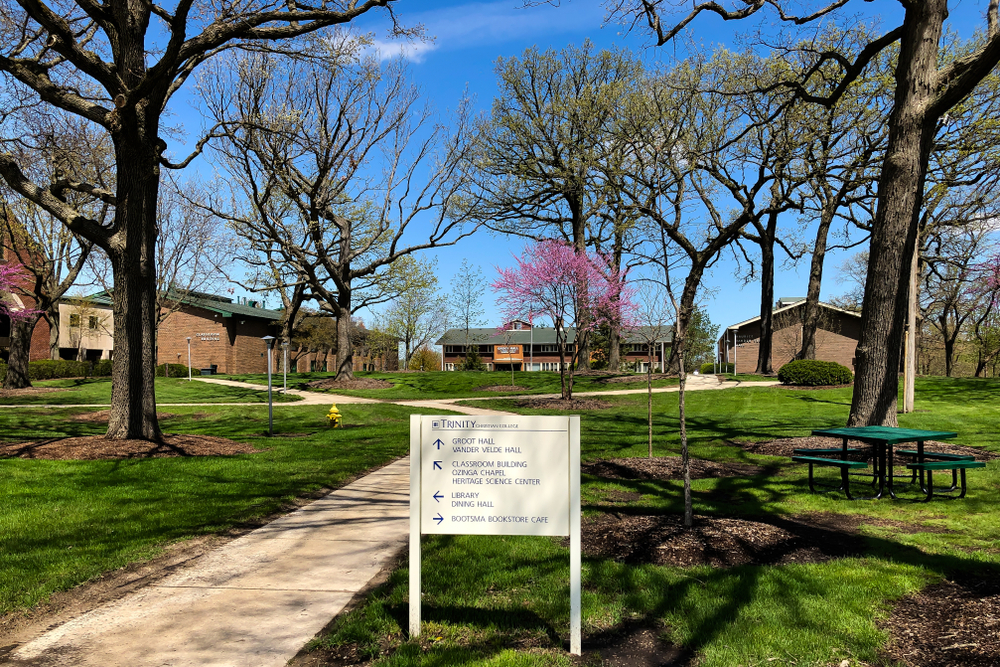
The college sits on a beautiful 52-acre campus in Palos Heights, Illinois—just 25 miles southwest of Chicago. Students enjoy a peaceful learning environment with easy access to big-city opportunities. This location lets them tap into Chicago’s cultural and professional scene while being part of a supportive campus community.
Trinity’s identity as a private Christian institution comes from its Reformed tradition roots. The college takes an educational approach that prepares students to act on their faith through meaningful service. Students learn to address timeless questions about human experience while applying a Reformed worldview to learning and life.
The college started with courses in philosophy, history, English, and theology. Now it offers more than 70 programs in disciplines of all sizes. The social work program has become one of Trinity’s strongest offerings.
Students in the social work program learn community-centered generalist practice with Christian values at its core. They discover that community well-being serves the common good. The program teaches that each community has unique gifts and assets, and people should take part in it.
The social work program’s accreditation by the Council on Social Work Education (CSWE) adds exceptional value. This credential shows the program meets professional standards and helps graduates advance their careers. Trinity’s Bachelor of Social Work (BSW) graduates qualify for advanced standing in Master of Social Work (MSW) programs at other schools. This means they can finish their graduate degree in one year instead of two.
The program aims to create community-centered, civically-engaged social work practitioners. These professionals can review evidence while staying true to social work values and ethics. This goal fits perfectly with Trinity’s dedication to justice, restoration, and common good within Reformed Christian, liberal arts education.
Trinity maintains high academic standards with personal attention to each student. The 10:1 student-faculty ratio helps build close relationships between students and their 55 dedicated professors. This creates an environment where individual guidance shapes each student’s educational experience.
The numbers show Trinity’s success clearly. The college has a four-year graduation rate of 51%. Graduates do well in their careers too. Their median salary reaches $48,107 six years after graduation.
Money matters to most students, and Trinity helps make education affordable. Tuition and fees cost $20,980. About 56% of first-year students receive need-based financial aid, which brings the average cost down to $20,384 for federal loan recipients.
Trinity’s Christian foundation shapes its approach to diversity and inclusion. The college’s mission states: “At Trinity Christian College, our very name celebrates the triune nature of God. Diversity is ultimately grounded in Him—one being, three persons, submitting to one another in love”. This belief creates a welcoming community where students from all backgrounds can succeed.
The college ranks No. 25 in Regional Colleges Midwest and No. 22 in Best Value Schools in the 2026 edition of Best Colleges. These rankings reflect Trinity’s excellent education at reasonable costs.
The social work program opens doors to many career paths. Graduates work as social workers and family support workers. They also become chaplains, counselors, arbitrators, career advisers, life coaches, youth workers, and community development professionals.
The social work department’s faculty brings real-world expertise to the classroom. The program benefits from strong leadership, including a Program Director for Social Work Adult Undergraduate Program, a Department Chair leading the Traditional Undergraduate Program, and a Director of Field Education managing practical learning experiences.
Where is Trinity Christian College located
Trinity Christian College sits in the suburban community of Palos Heights, giving students a peaceful campus setting with easy access to one of America’s major metropolitan areas. You’ll find the college at 6601 West College Drive, Palos Heights, Illinois 60463.
The 52-acre campus spans 52 acres with plenty of room for academic buildings, residence halls, recreational facilities, and green spaces where students study, relax, or enjoy outdoor activities. Students appreciate this mid-sized campus that creates a close-knit learning environment. They can easily get from class to class without feeling overwhelmed by distance.
The college’s prime location puts it approximately 25 miles southwest of downtown Chicago. Students from various academic programs, especially those in social work, benefit from this strategic position. A quick 30-minute commute to Chicago lets students tap into the city’s resources without spending too much time traveling.
Social work students find this Chicago connection particularly valuable. The city becomes an extended classroom that offers:
- Internship spots at major hospitals, social service agencies, and community organizations
- Experience with diverse populations and social issues that prepare students for real-life practice
- Professional networking events and conferences in the social work field
Students at Trinity enjoy exceptional cultural enrichment opportunities that many remote institutions can’t match. Chicago boasts world-class museums, theaters, concert venues, and cultural centers that add hands-on learning to classroom education.
Palos Heights’ suburban setting adds its own perks. The campus provides a quieter environment perfect for focused study and reflection, unlike city-center locations. Students still have access to community resources they need for practical learning.
The safe environment of Palos Heights helps students and parents feel secure during college years. Local amenities include parks, businesses, and restaurants within easy reach of campus.
Social work education demands field placements and community involvement. Trinity’s location strikes the perfect balance between urban resources and a supportive campus community. Students work with diverse client populations in Chicago and process these experiences back on the intimate campus setting.
The college helps students without cars by organizing transportation options to Chicago for academic needs throughout the year. This shows Trinity’s dedication to making sure every student benefits from the nearby city.
Commuter students find the campus location convenient too. Major roadways connect surrounding suburban areas to the college, making daily trips manageable for those who live off-campus.
Trinity’s mission focuses on preparing students for meaningful service in society. The proximity to a major urban center facing complex social issues creates natural opportunities for students to develop empathy, critical thinking, and practical skills through community engagement.
Illinois winters bring snow and cold temperatures, but the campus runs smoothly year-round with facilities built for Midwest weather. The grounds transform into pleasant spaces for community gatherings and recreation during warmer months.
Social work students at Trinity enjoy another key advantage: diverse field placement opportunities. These essential training experiences benefit from numerous agencies and organizations within easy reach of campus.
Trinity Christian College combines a peaceful suburban campus life with quick access to one of America’s most vibrant cities. This creates the perfect environment for academic growth, professional development, and personal formation – especially for students in helping professions like social work.
The college’s location does more than mark a spot on a map – it becomes part of the educational journey, creating opportunities that boost classroom learning and prepare students for effective careers in their chosen fields.
Trinity Christian College’s social work department runs detailed programs that help students build influential careers in a variety of community settings. Their Bachelor of Social Work (BSW) degree weaves Christian values and community-centered practices into every part of the curriculum.
Students learn to become skilled at generalist social work through a unique approach. The program teaches that communities have their own special gifts and strengths. Students discover they play a vital role in the community. This view matches the program’s goal to create community-focused, active social workers who can assess evidence well.
The BSW program goes beyond theory. Students learn social work values and ethics while developing a steadfast dedication to advocacy in the interests of justice, restoration, and common good. This happens within a Reformed Christian, liberal arts education. Students often finish their degree feeling energized, saying they are “on fire to make a difference in the world”.
The program’s accreditation by the Council on Social Work Education (CSWE) marks a major milestone. This respected status proves the program meets high professional standards and creates new possibilities for graduates. BSW graduates can apply for advanced standing in Master of Social Work (MSW) programs at other schools. Qualified Trinity graduates can finish their MSW in one year instead of two, saving both time and money.
Trinity now reaches more students with its online Bachelor of Social Work degree program built for adult learners. Starting Spring 2022, this program welcomes students 23 years or older who have some college credits. The online format helps if you have work and family commitments that make traditional classes difficult.
The adult program keeps the same high standards as the regular BSW program while being more accessible. Both programs stay true to Trinity’s mission by combining faith with practice. These options continue Trinity’s proven track record in social work education.
Trinity’s social work graduates have bright career prospects. The U.S. Bureau of Labor Statistics shows social work jobs will grow 6% from 2024 to 2034, faster than most other jobs. This growth creates many opportunities for Trinity’s social work students.
While many graduates become social workers or family support workers, their degree opens doors to other roles too. Trinity’s social work graduates often work as:
- Chaplains
- Counselors
- Arbitrators
- Career advisers
- Life coaches
- Youth workers
- Community development workers
These diverse career paths show how Trinity’s education gives students skills that work in many helping professions.
Trinity’s social work students get practical training through field education. Final semester students complete 400 hours of field placement. These placements happen at agencies around Chicago and through Trinity’s off-campus programs.
Students work at places like Access Community Health Network, Arab American Family Services, Bethany Christian Services, Chicago Coalition for the Homeless, Cook County Correctional, Mercy Home for Boys and Girls, North American Association of Christians in Social Work, and others. Off-campus options include Chicago Semester, Semester in Ecuador, and Semester in Uganda, which show students how social work differs across cultures.
Christian principles shape Trinity’s BSW programs deeply. Teachers bring a Christian view that values community involvement and social justice. All the same, students learn evidence-based methods and become good at analyzing research.
The college awarded 10 bachelor’s degrees in social work during 2021-2022. While online degrees weren’t available in 2021-2022, the new online adult program launched in Spring 2022 made the degree accessible to more people.
Trinity’s social work program shows its dedication to creating graduates who know that good practice needs both professional skills and strong ethics. Through challenging courses, extensive field work, and a clear focus on community involvement, Trinity Christian College runs social work programs that prepare students for more than just jobs – they prepare them to change lives and communities.
Field education at Trinity Christian
Trinity Christian College’s social work education stands out because of its detailed field placements that give students hands-on experience. The program knows that theory alone can’t prepare students for the ground realities of professional practice. Students develop key skills through field education opportunities and apply what they learn in class to real-life situations.
Students in Trinity’s social work program must complete a 400-hour field placement in their final BSW semester. This time commitment will give a solid foundation of practical experience that sets them apart from graduates whose education focused more on theory than practice.
The college’s prime location makes its field education program special by giving access to many agency sites throughout the Chicagoland area. Students can also gain global points of view through off-campus programs like Chicago Semester, Semester in Ecuador, and Semester in Uganda. These international options are a great way to get cross-cultural learning experiences that expand students’ knowledge of social work worldwide.
Social work practice happens in many settings, and field placements reflect this diversity. Students get practical experience in various environments:
- Non-governmental organizations (NGOs)
- Hospitals and healthcare facilities
- Schools and educational institutions
- Government agencies
This range lets students explore different specialties before they graduate, helping them find career paths that match their interests, strengths, and calling.
The college has built mutually beneficial alliances with respected organizations that serve as field placement sites. Some of these agencies include Access Community Health Network, Arab American Family Services, Bethany Christian Services, Chicago Coalition for the Homeless, Cook County Correctional, Mercy Home for Boys and Girls, and North American Association of Christians in Social Work (NACSW). More placement sites include All Our Children’s Advocacy Center, Blue Cap, Inc., By the Hand, Corazon Community Services, Elim Christian Services, Illinois Institute for Addiction Recovery, New Moms, Inc., Palos Heights Police Department, Palos Heights Rehabilitation Center, Parkview Community Church, Pathlights, Precious Blood Ministry, Restoration Ministries, Sarah’s Inn, and Sertoma Center, Inc.. This wide network helps students find placements that match their professional interests.
Trinity’s partnership with the North American Association of Christians in Social Work (NACSW) creates extra learning opportunities. This co-location setup opens doors for employment, internships, and hands-on learning. NACSW’s Executive Director Rick Chamiec-Case highlighted how this partnership creates “opportunities for NACSW to work with and give experience to student workers and interns from Trinity’s Social Work Department”. Both organizations benefit by sharing resources and supporting each other’s programs.
Field education connects classroom learning with professional practice. Experienced practitioners supervise and guide students throughout their placements, helping them blend theoretical knowledge with practical skills. This mentorship helps students direct complex situations and develop their professional identity.
Adult learners in Trinity’s BSW program, designed for students 23 and older, get field education that fits their needs. This program helps adults with some college credit balance work and family with their studies. While maintaining high standards, the field education component offers flexibility that works with their life commitments.
Trinity’s field education shows its steadfast dedication to developing “Christ-like change agents through the social work profession”. Students learn to combine their faith with professional practice and see how Christian values shape ethical decisions and compassionate service. Professor David Klinefelter, who serves on NACSW’s Board of Directors, praised Trinity’s field education for “the excellence of instruction overseen by the social work professors, the provision of valuable social work learning experiences for students, and the incorporation of a Christian world view for informing social work practice”.
Career development support enhances the field education experience. The Cooper Center at Trinity connects students with careers, internships, and part-time work. The college launched Handshake as an integrated platform where students create accounts for curated job listings matching their interests. Being part of a consortium of 18 smaller private Illinois colleges, Trinity gives students access to an online career center and yearly Career Fairs and Interview Days.
Field education at Trinity Christian College ended up being more than just a requirement—it shows how the institution prepares well-rounded professionals to serve diverse communities with skill and compassion. These experiences help students develop professional abilities and give them the confidence and ethical foundation needed for meaningful social work careers.
What sets Trinity Christian College apart?
Trinity Christian College’s social work program is known among its peers and has earned recognition for several good reasons. The program landed among the Top 25 Christian Colleges for a Social Work Degree Program in 2015. This achievement showcases the program’s steadfast dedication to excellence and its exceptional educational philosophy.
The Social Work Degree Guide highlighted that “Trinity Christian College is committed to its students’ long-term success, and annual outcomes reveal that the vast majority of graduates identify as professional social workers and feel that they can successfully apply ethical principles and critical thinking skills in their work”. Graduates emerge really prepared to meet professional practice requirements.
Trinity’s program excels at blending faith with practice. Students work within a community-centered generalist framework where they get chances to fulfill their callings to Christ-like service through professional knowledge, skills, and values. This mission pervades the entire curriculum and creates an exceptional learning experience that develops both professional competencies and spiritual growth.
The program teaches students that community well-being builds the foundations of common good. Students discover each community’s gifts and assets, learning that Christians must actively participate in their communities. This asset-based view sets Trinity’s approach apart from traditional deficit-focused social work models.
Students train to become “Christ-like change agents” through their social work profession. Program Director and Department Chair Dr. Cini Bretzlaff-Holstein explains that “assisting students in the development and discernment of their vocational call to be Christ-like change agents through the social work profession is at the heart of Trinity’s social work program”. Students connect their professional practice with personal calling, which creates deeper purpose.
Trinity now offers an innovative online program designed for adult learners. Students aged 23 or older with some college credit can access budget-friendly social work education despite work and family commitments. Dr. Bretzlaff-Holstein notes, “This new degree completion program offers adult learners access to an exciting opportunity beyond the traditional face-to-face undergraduate program”.
Expert faculty bring real-world experience to the classroom. To cite an instance, Dr. Lisa Doot Abinoja, Assistant Professor of Social Work and Director of Field Education, teaches from her community health background and work addressing racial and ethnic health disparities. Her direct practice and leadership roles add practical insights to classroom discussions. Dr. Abinoja wants to “get students in touch with their own cultures, biases, and privileges, and challenge them to think about the assumptions they make”. This approach prepares them for culturally responsive practice.
Council on Social Work Education (CSWE) accreditation gives Trinity’s students valuable benefits. Graduates can pursue advanced standing in Master of Social Work programs at other institutions. This path lets them complete their MSW degree in just one year instead of two, saving significant time and money.
Trinity’s social work graduates enjoy promising career prospects. The U.S. Bureau of Labor Statistics shows a 13% employment growth rate for all social workers from 2019-29, showing strong demand. Amy Tiemersma, MSW, LCSW, a clinical social worker at Trinity partner Bethshan Association, praises “the excellence of instruction overseen by the social work professors, the provision of valuable social work learning experiences for students, and the incorporation of a Christian world view for informing social work practice”.
Trinity’s social work program takes an integrated approach to professional education that:
- Prepares students for community-centered generalist social work practice
- Roots students in social work values and ethics
- Commits students to advocacy for justice, restoration, and common good
- Places education within a Reformed Christian, liberal arts context
Program outcomes prove its success. BSW Program Director and Department Chair Cini Bretzlaff-Holstein shares, “We are proud of our students and alumni who seek to pursue their vocational call for service through the social work profession”. She adds, “We thank the many voices who have influenced the growth and cultivation of the social work program, from our founders to past and current advisory group members, as well as our various field placement partners”.
Students looking for social work education with Christian foundations will find Trinity Christian College’s program exceptional. It equips graduates with professional skills and deep understanding of faith-informed practice in the interests of social justice and community well-being.
Next steps
Ready to start your educational trip at Trinity Christian College? The steps to join this faith-centered community are simple and clear.
The right application type matches your background. Trinity has several ways to apply:
- First Year: For students entering college for the first time seeking a bachelor’s degree (can also apply through the Common Application)
- Transfer: For students who have attended another college and wish to transfer to Trinity
- Adult Programs: Designed for students completing a bachelor’s degree with accelerated evening courses
- Graduate Programs: For students who have completed a bachelor’s degree seeking advanced education
Trinity created a special path if you have interest in the online BSW program and are 23 or older with some college credits. This option helps students who face challenges with work and family responsibilities.
The BSW program requirements make the application process smooth:
- Submission of all official transcripts from previously attended institutions
- Minimum 2.5 cumulative GPA
- Minimum grade of C (2.0) in social work courses
- Completion of the social work program application during the second semester of coursework
Your next step after acceptance is academic planning. Traditional student registration for Fall semester runs from April through August, with specific dates for transfer and freshman students. Adult undergraduate students get individualized course sequences based on their transfer credits.
A campus visit is a great way to get familiar with Trinity. You can meet professors, talk to current students, attend chapel services, check out dining options, and learn about financial aid. Schedule a customized Individual Visit or join a full-day Visit Day through Trinity’s website.
Trinity’s BSW opens doors to graduate studies. BSW graduates qualify for advanced standing in Master of Social Work (MSW) programs at other CSWE-accredited institutions. This path lets you complete an MSW in just one year instead of two.
The online adult BSW program needs specific skills to succeed:
- Independence, self-motivation, and good time management skills
- Comfort with technology and access to reliable equipment
- High-speed internet access
- Willingness to ask for help and communicate with professors when needed
Time management matters too. Plan for 10-15 hours weekly per 3-credit course, with more time for higher-credit courses [191].
Financial planning should be part of your decision. New students pay a $250 non-refundable deposit. Adult undergraduate program tuition costs $572 per credit hour plus a $100 technology fee each 16-week semester. Leadership scholarships in Art, Music, Theater, and Ministry have a January 15 application deadline.