
Social Work Programs at Southern Illinois University Edwardsville
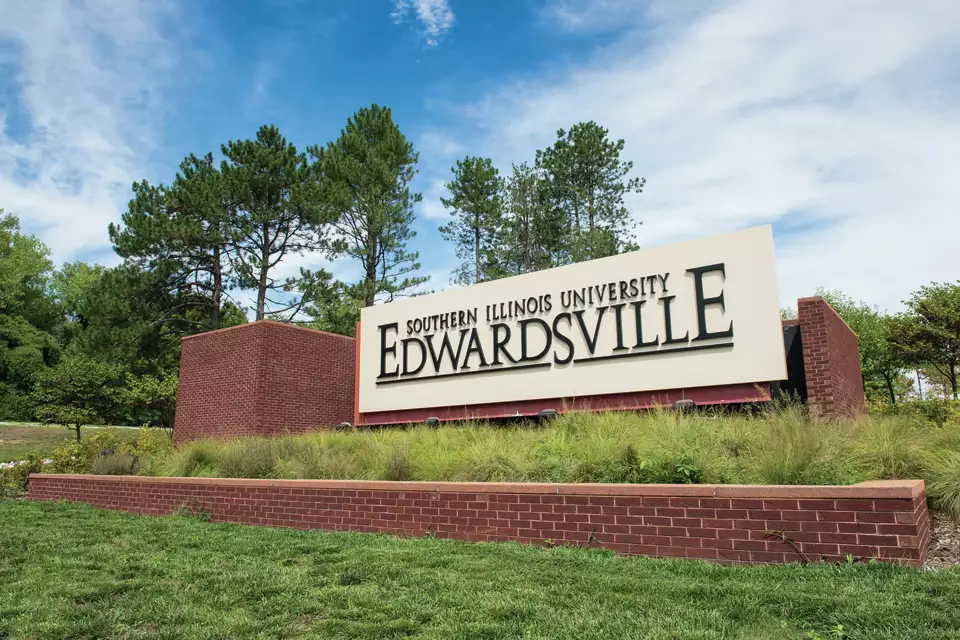
SIUE’s Department of Social Work puts people and communities first in its educational philosophy. The department’s mission aims to promote well-being and advance social and economic justice. Students learn to make meaningful differences in society.
Southern Illinois University Edwardsville is a postsecondary educational institution authorized by the Illinois Board of Higher Education. This recognition reflects the university’s steadfast dedication to quality education that meets state standards.
SIUE offers both undergraduate and graduate social work programs fully accredited by the Council on Social Work Education (CSWE). Students value this accreditation because it ensures program quality and lets graduates qualify for the licensed social worker (LSW) examination.
The social work curriculum at SIUE takes a practical approach. Students benefit from unique learning opportunities that go way beyond the reach and influence of traditional classrooms. They participate in community-centered scholarship and activities that provide tangible experience in addressing social issues.
Social work education at SIUE aims to improve social functioning and development at all system levels. Students develop skills to:
- Act as change facilitators with individuals, families, groups, organizations, and communities
- Make social conditions better
- Support people experiencing discrimination or social and economic injustice
- Link individuals with necessary resources and services
Master of Social Work (MSW) students work together with agencies and organizations throughout the region. These partnerships help students gain hands-on experience in service provision, program development, and advocacy. Their work directly supports individuals and families facing health and mental health concerns, homelessness, poverty, and other social justice vulnerabilities.
The Bachelor of Social Work (BSW) program prepares generalist practitioners ready for entry-level positions in a variety of social service settings. Graduates work in child welfare, family services, mental health support, and health agencies. This undergraduate foundation provides detailed preparation for professional practice and sets the stage for advanced study.
Field education plays a vital role in SIUE’s social work education. Undergraduate students complete field work in local social service agencies across several courses. Their experience ends with a senior field placement that requires a minimum of 400 hours of supervised social work practice over two consecutive semesters. This hands-on training ensures graduates have both theoretical knowledge and practical experience.
SIUE’s Master of Social Work program offers specialized training for advanced study. It also helps that many graduate social work programs nationwide offer advanced standing to qualified applicants with a bachelor’s degree from a CSWE-accredited program like SIUE’s.
A strong alumni network supports the Department of Social Work at SIUE. Many graduates have built distinguished careers in mental health, counseling, social justice advocacy, and various fields that support marginalized populations. This network creates valuable connections and mentorship opportunities for new professionals starting their trip.
The department’s alumni and donors contribute generously to student scholarships. These financial resources make education more available and show the paying-it-forward culture that defines SIUE’s social work community.
SIUE’s Social Work Department helps students find meaningful life purpose beyond specific career paths. Students can center their education, launch their career, and develop skills needed to create positive social change.
If you have interest in specialized areas, the undergraduate program offers focus areas in Diversity and Social Justice, where you can learn grant writing and resource development, and Employment Relations, where you’ll learn to promote commitment and productivity in workplaces.
SIUE’s approach to social work education emphasizes application. Students apply classroom learning to practical scenarios through hands-on experiences. They work directly with communities to gather data and develop strategies for community strengthening.
SIUE’s Department of Social Work shows excellence in teaching, research, and service. Students become effective agents of change with the knowledge, values, and skills needed to promote social functioning and improve development at all levels of society.
Where is Southern Illinois University Edwardsville located
Southern Illinois University Edwardsville stands proudly on Madison County’s bluffs with beautiful views of the Mississippi River bottom lands. The campus spreads across 2,660 acres of trees and lakes, making it one of America’s largest college campuses.
SIUE’s home in Edwardsville, Illinois, within the Metro East region of Greater St. Louis, creates a perfect setting for social work education. Students experience both natural beauty and diverse urban environments. This unique location lets social work students learn in rural and metropolitan settings to better understand different community needs.
You’ll find SIUE at 6 Hairpin Drive, Southern Illinois University, Edwardsville, IL 62026. This address takes you right to the center of campus where social work programs are housed.
Downtown St. Louis is just 25 minutes away from SIUE. Social work students can easily find internships, field placements, or jobs across state lines. The quick commute lets students train at social service agencies in both Illinois and Missouri.
The campus connects to several major interstate highways. Here’s how to reach SIUE:
- From north of campus: Take I-55 South to Illinois 143 West (Exit 23). Go straight at the light onto Governor’s Parkway to reach campus.
- From south of campus: Take I-55 North to I-255 North (Chicago) to I-270 East, then exit at Illinois 157 North.
- From east of campus: Take I-64 West to I-255 North (Chicago), then I-270 East and exit at Illinois 157 North.
- From west of campus: Take I-64 West to I-255 North (Chicago), then I-270 East (Indianapolis) and exit at Illinois 157 North.
On Illinois 157 North, go straight at the stop light instead of following 157 right to reach the campus core. Visitors can park in Visitor Lot B. The lot includes designated spots for people with disabilities.
Students without cars can use these options:
- Madison County Transit (Bus)
- Metro (St. Louis Mass Transit)
- Amtrak rail service
These choices make SIUE available to everyone, supporting the university’s dedication to inclusivity—a core social work value.
SIUE started in 1957 as part of Southern Illinois University Carbondale. It grew into a major educational institution with authorization from the Illinois Board of Higher Education.
The Office of Admissions welcomes prospective social work students in Rendleman Hall, room 2101 on the second floor.
SIUE’s natural setting enhances learning. The peaceful campus with its natural areas provides quiet study spots and research spaces. Social work students say this environment helps them reflect—a key skill for their field.
Beyond the main campus, SIUE runs University Park and the East St. Louis Center. The East St. Louis Center gives social work students chances to work with urban communities and develop their skills in different settings.
Well-kept pathways and roads named Hairpin Drive, Circle Drive, and Prairie Drive connect campus buildings. Students can easily move between classes, research facilities, and community projects.
Social work students benefit from SIUE’s location between rural southern Illinois and metropolitan St. Louis. They can practice at small-town agencies or big urban hospitals and community centers. These varied options help students explore different career paths.
The campus’s natural beauty helps students learn about human ecology and environmental justice—growing areas in modern social work. Lakes, woods, and open spaces teach students about people’s connections with their surroundings.
SIUE’s location near several interstate highways makes it perfect for regional conferences and networking events. Students can connect with professionals throughout the bi-state area, opening more career opportunities after graduation.
SIUE provides detailed social work education through two main degree paths. Each path prepares students for different levels of professional practice. The Bachelor of Social Work (BSW) program gives students fundamental knowledge and skills. The graduate-level Master of Social Work (MSW) program offers advanced training for specialized practice.
Bachelor of Social Work (BSW)
SIUE’s BSW program readies students for entry-level social work practice in many settings. The curriculum uses a person-in-environment approach that looks at people within their broader social contexts. This viewpoint helps students understand how different factors affect human well-being.
Students who complete this program can take the licensed social worker (LSW) examination and start their professional practice right after graduation. The BSW program blends theory with ground application. Students get hands-on experience to use their classroom learning in real-life situations.
Two specialized focus areas add value to the BSW curriculum:
- Diversity and Social Justice: This specialization places students in nonprofit organizations where they learn grant writing skills and resource development techniques to advance social justice causes.
- Employment Relations: Students complete internships in organizations where they develop strategies to improve workplace commitment and productivity.
BSW graduates can work in many settings, including:
- Child welfare agencies
- Family service organizations
- Mental health facilities
- Health agencies
The BSW program teaches students to become agents of change at all system levels—from individuals and families to groups, organizations, and communities. Students learn to improve social conditions, support people facing discrimination or injustice, and help individuals find essential resources.
Master of Social Work (MSW)
The MSW program at SIUE features an Advanced Generalist curriculum that prepares students for complex practice responsibilities. Most classes happen face-to-face during evening hours, with some online or hybrid options.
The MSW program has two main parts:
- Generalist Curriculum (30 hours): Students learn about social work history, theoretical framing, values, ethics, simple skills, and practice orientations.
- Specialized Curriculum (30 hours): Students build on their foundation with advanced theoretical application, practice skills, policy analysis, and evaluation methods.
Students can choose from flexible completion options:
- Regular Standing: Students complete both Generalist and Specialized curricula, totaling 60 credit hours. They can finish in:
- Two years (full-time): Six consecutive semesters including summers
- Four years (part-time)
- Advanced Standing: Students who earned a BSW from a CSWE-accredited program in the last seven years qualify. This option needs only the 30-hour Specialized Curriculum and takes:
- One year (full-time): Three consecutive semesters including summer
- Two years (part-time): Six consecutive semesters
MSW students work with communities alongside their classroom learning. They team up with agencies and organizations to provide services, develop programs, and support individuals facing health challenges, homelessness, poverty, and other social justice issues.
Curriculum Highlights
The MSW program’s Generalist Curriculum includes ten three-credit courses:
- Generalist Practice with individuals, families, organizations, and communities
- Counseling Skills Development
- Social Welfare Policy
- Research Methods and Data Analysis
- Human Behavior in the Social Environment
- Field Instruction
The Specialized Curriculum has seven required courses plus three electives (9 hours). Required courses include Advanced Micro Practice, Advanced Policy, Advanced Macro Practice, Applied Social Science Research, Advanced Field Instruction, and a Capstone experience.
Accreditation and Licensure
The Council on Social Work Education (CSWE) fully accredits both BSW and MSW programs at SIUE. This accreditation shows that both programs meet high educational standards.
MSW graduates can take licensure exams for social work practice. State requirements vary, but the Licensed Clinical Social Worker (LCSW) credential usually needs 3,000 hours of supervised clinical practice after earning an MSW.
Field education plays a vital role in both programs. MSW students complete extensive field placements that provide real-life experience in social service settings. These placements are a great way to get practical knowledge, develop professional skills, and grow your professional network.
Neither program gives academic credit for life experience or previous work experience. This ensures all graduates have shown competency through academic coursework and supervised field practice.
SIUE’s social work programs offer thorough preparation for effective practice in a variety of settings. The BSW or MSW path will help you become skilled at promoting social functioning and advancing social justice in communities everywhere.
Field education at SIUE
Social work training at Southern Illinois University Edwardsville has field education as its foundation. The Council on Social Work Education (CSWE) officially calls it the “signature pedagogy” for social work education. CSWE standards show how field education wants to “integrate the theoretical and conceptual contribution of the classroom with the practical world of the practice setting”.
SIUE calls field education “practicum.” This vital part of your education lets you use what you learn in class in actual settings. Much like student teaching in education programs, you’ll practice social work skills while professionals supervise your work.
Your SIUE practicum experience comes with amazing flexibility. Placement opportunities spread across Illinois and Missouri. Mental health agencies, hospitals, community organizations, and nonprofit agencies in both urban and rural areas are ready to host you. This wide range of locations helps you match your field experience with your career goals.
BSW degree students follow a specific practicum timeline. Your field hours happen during fall and spring semesters of your senior year. You’ll need to complete 400 hours, with at least 200 hours each semester. You should plan your schedule well to fit these hours with your classes.
Graduate students usually complete their practicum during spring and summer terms. A summer block option exists if you need different arrangements. Start your practicum planning early – best to begin the semester before you want to enroll.
Your practicum trip needs some boxes checked first. Undergraduate students must:
- Keep at least a 5 GPA
- Pass all junior-level classes with a C or better
- Get formal admission to the BSW program
- Fill out all practicum paperwork
A well-organized process matches you with the right agency. You’ll start by meeting the Director of Practica to look at your application and talk about possible sites. Next, you’ll reach out to and interview with potential field placement agencies. This process works like a job application – you’ll need cover letters, resumes, and might need background checks or health screenings.
After placement, you’ll create a Practicum Learning Agreement. This formal document spells out activities and expectations that you, your field supervisor, and faculty all agree on. This agreement makes sure your field experience matches educational goals and core competencies.
Field seminars happen weekly and play a key role in your practicum. The Field Liaison or Director of Practica leads these sessions. They help you connect classroom material to practice, discuss new issues, and let faculty track your progress. These seminars give you great chances to reflect, though seminar time doesn’t count toward your required field hours.
Transportation matters a lot for field placements. You don’t have to own a car, but you need reliable ways to reach your practicum site on time. Some placements involve community outreach or home visits, so you’ll need your own transportation.
SIUE’s Department of Social Work takes professional standards seriously. Unethical behavior during practicum could lead to discipline or even program dismissal. The NASW Code of Ethics and department’s Professional Behavior Policy must guide your actions throughout your placement.
Safety and liability rules say you can’t drive clients in your personal vehicle. Agency vehicles are okay if you meet their policies. The university won’t cover your travel costs, so work out transportation details before starting your placement.
Your practicum ends with a formal evaluation. BSW seniors take a standardized social work exam (SWEAP) and get a final evaluation from their practicum instructors. This process shows if you’re ready for professional practice.
SIUE social work students have built excellent reputations at agencies across the region. Many students find jobs through their practicum since agencies often see it as an extended job interview and training period.
SIUE’s field education program will give you both theory and hands-on experience. You’ll graduate ready to start your career as a competent practitioner or move on to advanced social work studies.
What sets SIU Edwardsville apart?
SIUE’s social work programs excel through their steadfast dedication to social justice principles and practical learning experiences. Social work department’s mission extends beyond theory. It strives to “promote the well-being of people and society and advance social and economic justice”. This mission-driven philosophy spreads through both undergraduate and graduate programs.
Dedicated and passionate faculty members form the backbone of the department. These educators do more than aid student success – they “challenge and inspire, guide and assist throughout your student career”. The department has professionals from varied backgrounds. To name just one example, Dr. Jennifer Erwin worked as a job developer for low-income seniors, managed cases for adults with severe mental illnesses, and served as a development assistant in fundraising. Dr. Ariel Hooker Jones brings clinical expertise from outpatient mental health services, early childhood mental health consultation, hospital social work, and substance abuse treatment.
These professors stay active in campus and community work. Dr. Erwin serves on the Faculty Senate, Queer Faculty & Staff Association, Faculty Association, and Safe Zone committee. Their involvement brings fresh, real-life points of view to teaching and mentoring.
Students apply classroom concepts directly in practice settings. The university proudly states, “At SIUE, we focus on application. Our students participate in hands-on experiences so they can apply what they learn in their classes to real-world experiences”. This hands-on approach helps students build professional skills from day one.
SIUE’s social work programs offer specialized training paths. The undergraduate program features two unique focus areas:
- Diversity and Social Justice: Students intern at nonprofit organizations where they write grants and create resources for justice initiatives.
- Employment Relations: Students work in organizations to boost workplace commitment and productivity.
The department’s extensive alumni network stands out as a key strength. Many graduates have built “distinguished careers in mental health, counseling, social justice advocacy, and a variety of fields that advance society by lifting those most marginalized”. Current students benefit from these connections when seeking mentors or jobs after graduation.
The program’s impact shows through its “altruistic alumni and donors who pay it forward by funding scholarships for our students”. This generosity proves how SIUE’s social work education creates lasting change and keeps its mission alive.
Strong ethical standards guide SIUE’s Department of Social Work. The department enforces “zero tolerance for the denigration of any person based on race, ethnicity, sex, gender, gender identity, sexual orientation, religion, age, disability, or any other dimension of human identity”. This foundation creates a space where human dignity comes first.
Professional conduct matters everywhere – not just in class. Students must “uphold and adhere to the Academic and Ethical Standards of the Performance Policy in and outside of class, including but not limited to activities they are involved in on SIUE property, in the wider community, at practicum placements, volunteer sites, and online”. These high standards shape graduates into true professionals.
SIUE takes a unique approach to personal growth in social work education. Students learn that studying “historical and contemporary structural influences on marginalized and oppressed populations may challenge previously held attitudes and require significant personal change”. The department “strongly encourages students to develop a support system in which all attitudes may be examined and challenged toward the goal of greater empathy and social action”.
SIUE’s Department of Social Work calls itself “a great place to center your education, launch your career, and establish a life purpose”. This complete view of professional education – knowledge, skills, meaning, and purpose – makes SIUE different from career-focused programs.
People who want to help others find their path at SIUE. Their materials highlight that “Social Work [is] a fulfilling major for those who want to ensure that even society’s most vulnerable have basic resources that validate their inherent human dignity”.
SIUE ended up creating something special – a program that blends professional education with personal growth and social change. Their graduates become more than practitioners; they become agents of positive change in their communities.
Next steps
Want to start your social work career at Southern Illinois University Edwardsville? Your path to becoming a professional social worker starts with understanding how to apply and what you need for your chosen program.
The Bachelor of Social Work (BSW) program has specific timing requirements. You should submit your application between October and January of your sophomore year. This lets you start the program in fall semester of your junior year. The BSW application deadline for the 2024-2025 academic year is March 1, 2024. You’ll need a minimum 2.5 GPA and at least 30 credit hours from any college or university to be eligible.
If you’re interested in the Master of Social Work (MSW) program, the priority deadline is February 1st. Applications might be accepted until March 1st if spaces remain. Applying by the priority deadline gives you better chances of getting your first choice in specialization and earlier decisions. The MSW Program Committee looks at complete application packets that include graduate study applications, personal statements, recommendation letters, and transcripts.
SIUE’s social work graduates have many career options. BSW and MSW graduates work as:
- Clinicians and therapists
- Program coordinators and evaluators
- Community developers
- Administrators
- Educators and advocates
These professionals work in a variety of settings including adoption and foster care, substance abuse treatment, health and mental health care, hospice services, social policy development, criminal justice, military and veteran services, and environmental social work.
International students should submit their applications well before priority deadlines. The university suggests early applications because getting visas can take time. If international applicants can’t arrive when their admission term starts, they can ask for their admission to be moved to the next semester.
MSW applicants need to submit:
- Application for admission to the SIUE Graduate School
- Application for admission to the MSW Program
- Two letters of recommendation (one from a previous faculty member, one from a social service supervisor)
- Personal statement
Send all official transcripts directly to the SIUE Graduate School. SIUE graduates don’t need to send additional transcripts.
Both BSW and MSW programs include significant hands-on experience. BSW students complete 400 practicum hours over two semesters. MSW students do 450 hours in the generalist curriculum and 500 hours in the specialized curriculum. These experiences often lead to job offers, as many graduates end up working at their practicum sites.
One last thing to think about: evening and weekend practicum placements are very hard to get. Most agencies expect students during regular business hours. Plan carefully, especially if you want to work while getting your degree.