
Social Work Programs offered at Illinois State University
Social workers promote positive change and use their expertise to help individuals and communities overcome challenges. They solve problems, participate in assessments, and support people who face difficult social and personal situations. These professionals provide support and encouragement that creates paths toward improvement and stability.
Illinois State University’s School of Social Work prepares you to join this influential profession. The programs develop skilled, compassionate practitioners. The school’s mission focuses on social and economic justice, progressive social change, human dignity, and personal freedom in a society that experiences rapid technological and social transformation.
Your studies at ISU’s social work program will help you find diverse settings where social workers practice. These professionals reach every corner of community life where support is needed – schools, government agencies, medical facilities, nursing homes, private organizations, and corporations. Social workers address problems like violence, mental illness, drug abuse, racism, and poverty. They make concrete differences in people’s everyday lives.
The School of Social Work at Illinois State University combines classroom learning with practical field experience. You’ll work together with dedicated faculty and staff while gaining valuable experience among professionals in the field. This combination will give you both theoretical knowledge and practical skills to work effectively as a social worker.
ISU’s social work program is known for its detailed approach to education. The undergraduate program builds on a liberal arts foundation that provides well-rounded education beyond specialized training. This approach gives you expertise in social work theory, practice, and research—knowledge you need to respond to diverse populations’ evolving needs.
Illinois State University’s social work program exceeds typical field education requirements. Undergraduate students get 30 percent more hours in field practicum compared to standard requirements and other universities. This extra practical experience substantially improves your preparation for professional practice.
The school prioritizes academic excellence while promoting social work profession’s values. Faculty, administration, staff, and students share a vision for the school’s future. They strive for academic freedom and excellence in research, teaching, and community service. This shared environment includes all stakeholders in shaping the program’s direction.
The School of Social Work shows strong dedication to addressing systemic inequality. They acknowledge that the campus sits on lands that belonged to multiple native nations, including the Illini, Peoria, and Myaamia peoples. The school’s Anti-Racism Committee helps address racism and injustice issues. This builds on social work’s core competency of embracing diversity and difference in practice. The committee works with students, faculty, staff, alumni, and community members to train, educate, and equip people to break down patterns of racism and injustice.
The Baccalaureate Degree in Social Work at Illinois State University is accredited by the Council on Social Work Education. This ensures the program meets professional standards. The School of Social Work also enriches interdisciplinary education through the Interdisciplinary Studies Program, offering students broader educational experiences.
Students interested in specialized areas can choose from several concentrations. The Child Welfare concentration, developed with the Department of Children and Family Services, allows students to become certified child welfare specialists after graduation. Students can also learn about gerontological issues by completing a Minor in Social Aspects of Aging.
Graduate students can pursue an M.S.W. program with specialized sequences in Child and Family Practice and School Social Work. The school offers certificates in Social Aspects of Aging and Women’s, Gender, and Sexuality Studies through collaboration with other departments. A Post-MSW Professional Educator License Graduate Certificate serves MSW degree holders who want to work in schools.
The School of Social Work maintains high professional standards through strict academic requirements. They enforce professional practice standards specified in the Illinois Clinical Social Work and Social Work Practice Act and the National Association of Social Workers Code of Ethics. Undergraduate students must maintain a 2.50 cumulative major grade point average and earn at least a C grade in all required Social Work courses.
These detailed programs and high standards prepare you to contribute meaningfully to society and advance human rights and social justice values in your professional practice.
Where is Illinois State University located
Illinois State University sits in the town of Normal, Illinois, creating a welcoming educational setting for students who pursue degrees in social work and other fields. The university runs facilities not only in Normal but also in its twin city Bloomington and Springfield, which extends its reach throughout central Illinois. Students in the social work program benefit from this strategic spot that gives them chances to practice in both urban and suburban settings.
The campus spreads across 1,180 acres with academic buildings, residence halls, recreational facilities, and green spaces. Future social workers thrive in this spacious learning environment that gives them room to study and work together. The physical location of ISU helps prospective social work students understand where they’ll spend their key educational years.
The university’s bond with Normal tells an interesting story. Normal got its name from the university. The school started as Illinois State Normal University, where “normal” meant a teaching school – its main purpose when it began. Back in 1865, the town changed its name from North Bloomington to Normal, which shows how much the university shaped the community. Social work students can learn from this deep community connection that will help them in their practice.
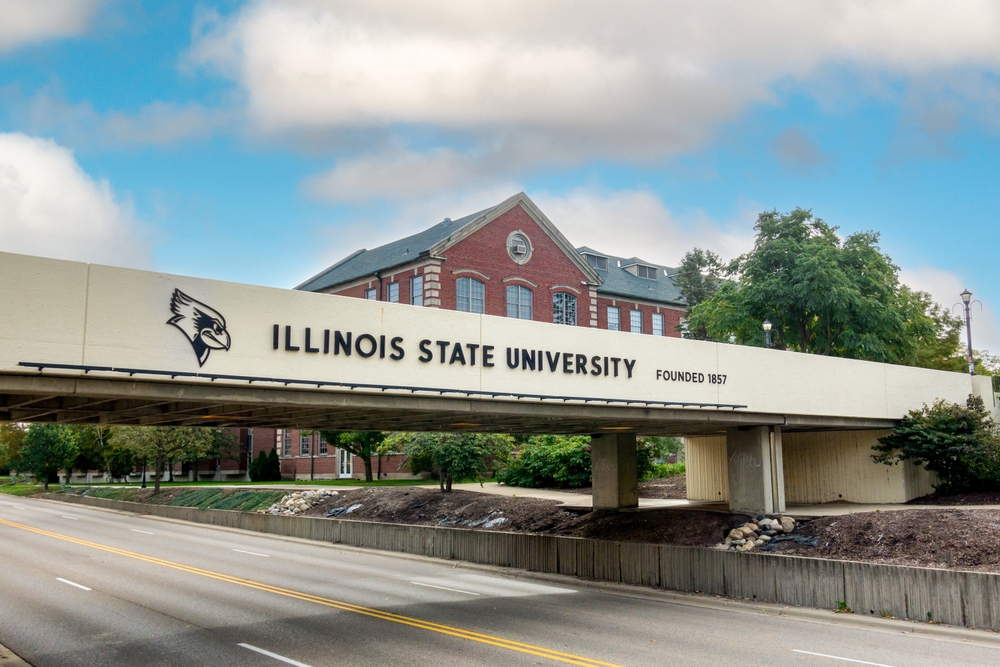
The university opened its doors in 1857, making it one of Illinois’s oldest public schools. It has grown into a complete university while keeping its focus on quality education. Social work students build their careers on this long tradition of excellence.
The school’s location in a safe, convenient suburban area adds to its appeal. Safety matters to all students, especially those in helping professions like social work who connect with community resources. Normal-Bloomington strikes the right balance – it feels like a small community but offers city amenities.
The university’s location makes it available to many students. Chicago and St. Louis are just a drive away, which lets students take weekend trips or build professional networks. Social work students can connect with different practice settings and find jobs after graduation in these major cities.
Getting around campus is easy. The town serves as a transport hub with regular busses, an Amtrak station in Uptown Normal, and access to Bloomington’s airport. These transport links put the social work program within a few hours of most major U.S. cities. Students from anywhere in the country can reach the campus and find field placements in various communities.
The university setting is perfect for learning social work. Students experience diverse populations and social issues in the urban campus, which prepares them for ground practice. They learn from both university resources and practical opportunities in nearby communities.
Campus resources and community ties create the right environment for social work education. Students gain hands-on experience through field placements and service-learning in Normal, Bloomington, and beyond. They work with different populations and tackle various social challenges, which helps them develop essential skills for effective practice.
The central Illinois location lets students address both urban and rural social issues. This unique advantage helps social work students who might work in different settings after graduation. Rural social work comes with its own challenges and opportunities that differ from city practice, and exposure to both settings enriches their learning.
The university has kept strong community ties throughout its history, which lines up perfectly with social work values. These connections help create partnerships between the social work program and local agencies, giving students valuable learning opportunities. The university’s location adds substantially to its social work programs’ quality, offering both academic excellence and practical learning in a supportive community.
Illinois State University provides detailed social work programs that prepare students for effective careers in various specializations. The university demonstrates its dedication to social work education through academic offerings that target multiple career paths within the field.
The Bachelor of Social Work (BSW) program at ISU forms the cornerstone of social work education. The Council on Social Work Education (CSWE) has fully accredited this program, which will give a solid professional standard of education. Students learn generalist social work practice through a liberal arts foundation. The program gives them the tools in social work theory, practice, and research to help diverse populations.
ISU’s Master of Social Work (MSW) degree builds on this foundation with specialized sequences. Students must complete 30 hours of foundation curriculum courses or qualify for waivers through advanced standing admission.
The MSW program offers two main specialization tracks:
The Child and Family Practice Specialization tackles major social issues like mental illness, intimate partner violence, poverty, and substance use. Students complete 24 hours of coursework plus 6 hours of approved electives. Agency-based practice lets students apply their classroom knowledge directly with children and families.
The School Social Work Specialization readies students to work in K-12 educational settings. This track needs 24 hours of specialized coursework including, with 3 hours of approved electives. Students spend one academic year in a school setting practicum placement where they cooperate with teachers and families to create individualized education plans (IEPs) and provide counseling services.
ISU offers several additional certifications:
The Post-MSW Professional Educator License Graduate Certificate helps social workers who completed their MSW to get a professional educator license with a school social work endorsement from the Illinois State Board of Education. Students can complete this part-time program over two years, with coursework in year one and a 700-hour practicum placement in year two.
The Child Welfare Certification results from a partnership with the Department of Children and Family Services (DCFS). Social work students can become certified child welfare specialists after completing specialty classes (SWK 323 and SWK 324).
ISU cooperates with other departments to offer the Graduate Certificate in Social Aspects of Aging and the Women’s, Gender, and Sexuality Studies Graduate Certificate for Social Workers. These 12-hour programs help practitioners understand their clients’ challenges better.
Field education plays a vital role in ISU’s social work training. The Child and Family Practice specialization requires both generalist and specialist practicum experiences. Students complete the Generalist Practicum with 400 hours over 12 weeks during summer, averaging 33-35 hours weekly, alongside a Generalist Practicum Seminar. The Specialist Practicum needs 700 hours over two consecutive semesters with 22-25 weekly hours.
School Social Work specialization students must pass the Illinois social work content exam (Content Exam 238) to qualify for the Professional Educator’s License with a School Social Work endorsement. Students need to pass this exam by the fall semester’s end during specialist practicum placement.
BSW program admission requires foundation courses in math, writing, science, social sciences, history, and reasoning. Students must keep a 2.50 cumulative major GPA and earn C grades or better in all required courses.
MSW students need to maintain a 3.0 cumulative GPA and earn C grades or better in each course. Field-related courses require B grades or better. Students have six calendar years from registration to complete all MSW degree requirements.
These detailed social work programs showcase ISU’s steadfast dedication to creating skilled practitioners who can tackle complex social problems and advance human rights in diverse settings.
Field education at ISU
Field education is the foundation of Illinois State University’s social work curriculum. It builds a bridge between classroom theory and professional practice. This hands-on learning lets you apply academic concepts to real-life situations while you work with experienced social work professionals. The practical experience is a vital part of building skills and confidence you’ll need after graduation.
ISU’s School of Social Work teams up with many community partners to help create these learning experiences. These long-standing relationships give you access to different types of practicum experiences that change yearly based on what agencies need and can offer. The university works together with you to find a practicum placement that fits your educational goals.
Each program level has specific field education requirements that meet professional standards:
- BSW Field Placement: Requires 500 total hours, divided evenly between fall and spring semesters (250 hours per semester)
- MSW Generalist Field Placement: Requires 300 hours during the summer semester
- MSW Specialist Field Placement: Starting Fall 2025, requires 600 hours (300 hours per semester)
This structured approach will give a proper supervision and help you build professional skills throughout your educational experience. You’ll develop the confidence and skills you need for independent practice after graduation.
ISU offers complete field manuals with essential policies, procedures, forms, and assignments for both agency and school-based placements. These resources help BSW and MSW students get the most from their learning experience. The Field Education Program also uses the Sonia Online Database to keep track of all students in field placements. The Director of Field Education grants database access.
MSW students who want to work in counseling can apply for a specialized 10-month internship at Student Counseling Services from August to May. This placement works best as a second field experience for students who have at least one year of clinical experience. You’ll learn about all services, therapeutic viewpoints, and team-based skills found in a University Counseling Center.
The MSW internship needs 20 hours each week, usually spread over 2-3 days. Here’s how you’ll spend your time:
| Service Activity | Weekly Hours |
| Individual Counseling | 6 |
| Group Counseling | 2 |
| Triage Assessment | 1 |
| Single Session | 1 |
| Case Management | 1 |
| Didactic Seminars | 1 |
| Clinical Paperwork | 3 |
| Supervision | 3 |
| Staff Meetings | 2 |
| Total | 20 hours |
Students must be enrolled in an accredited MSW program to qualify for this counseling internship. They need one completed field placement and prior clinical experience. Staff will review your clinical experience, check faculty recommendations, and conduct personal interviews. A background check is needed since this is a security-sensitive position.
Your search for field placements starts with looking into agencies that match your interests. The School of Social Work groups these chances into Undergraduate Placements, Generalist Placements, and Specialist Placements. This research helps you find settings that fit your career goals.
You’ll work alongside social work professionals who mentor and guide you. This apprenticeship lets you watch experienced practitioners, get helpful feedback, and take on more responsibilities over time. The connections you make often last beyond graduation and help advance your career.
ISU’s field education goes deeper than most schools – this is a big deal as it means that you get more hands-on experience than typical requirements at other institutions. The university believes in creating exceptional practitioners ready for today’s complex social work challenges.
BSW students interested in child welfare can match their field placements with the Child Welfare Certification program. MSW students focusing on School Social Work complete their placements in K-12 educational settings for direct experience in this specialty.
Without doubt, field education will transform your social work education at Illinois State University. These structured, supervised experiences help you develop practical skills, professional identity, knowing how to make ethical decisions, and cultural competence – everything you need for effective social work practice.
What sets Illinois State University apart?
The Illinois State University social work program stands out with its complete approach to social work education. Students benefit from several unique advantages that prepare them for excellence in the profession. A combination of rigorous academic preparation and extensive field experience creates graduates who contribute immediately in a variety of practice settings.
ISU’s undergraduate social work students receive 30 percent more hours in field practicum than other universities typically require. This extra experience gives students broader exposure to professional settings. They develop deeper skills before graduation.
The program builds on a liberal arts foundation that provides a well-rounded education beyond specialized training. Students develop expertise in social work theory, practice, and research—everything in social work helps them respond to evolving community needs.
Students work directly with dedicated faculty and staff throughout their education at ISU. The program treats them more like colleagues than students. This collaborative environment creates valuable connections with professionals in field settings that often last beyond graduation.
The program’s accreditation status reflects its academic excellence. The Baccalaureate Degree in Social Work has full accreditation from the Council on Social Work Education. This ensures degrees meet established professional standards. The School upholds professional standards of practice specified in Section 6369 of the Clinical Social Work and Practice Act.
ISU offers valuable concentrations many institutions don’t have. The Child Welfare concentration, developed with the Department of Children and Family Services (DCFS), lets graduates become certified child welfare specialists right after graduation. Students who complete specialty classes (SWK 323 and SWK 324) gain this certification, which gives them an advantage in this critical field.
Students can boost their knowledge of gerontology through the Minor in Social Aspects of Aging. This interdisciplinary approach helps them address older adults’ complex needs—a growing demographic that needs specialized social work services.
Research opportunities flourish at Illinois State University. The Office of Student Research serves as a one-stop resource for campus and beyond. Students develop valuable research skills while contributing to field knowledge.
The School’s mission emphasizes its dedication to social and economic justice, progressive social change, human dignity, and personal freedom. This mission shapes program development and creates a values-centered educational experience.
| Distinctive Features of ISU Social Work | Benefits to Students |
| 30% more field practicum hours | Enhanced practical experience |
| Child Welfare Certification | Immediate specialist status upon graduation |
| Anti-Racism Committee initiatives | Training in equity and justice work |
| Liberal arts foundation | Broader knowledge base for practice |
| Honors work for superior students | Recognition for academic excellence |
The School of Social Work tackles systemic inequality through dedicated initiatives. The Anti-Racism Committee addresses racism and injustice issues, building on core social work competency in diversity and difference. Students, faculty, staff, alumni, and community members work together to dismantle patterns of racism.
The School welcomes academically gifted students with honors work opportunities. Qualification requires University Honors Program membership, completion of 12 honors credit hours, a cumulative University GPA of 3.30 or better, and a Social Work GPA of 3.50 or better.
The Illinois State University social work program excels through its extensive practical experience, specialized concentrations, collaborative learning, research opportunities, and steadfast dedication to social justice principles. These elements work together to prepare students for an influential career addressing society’s most pressing challenges.
Next steps
Want to start your career in social work at Illinois State University? You need to understand the application process and requirements before you can join ISU’s programs.
The social work program website will help you learn if this profession matches your career goals and interests. You should schedule an appointment with the BSW Program Director or MSW Program Director. They can help you understand the social work profession and decide if it’s right for you.
BSW admission requires you to meet these key requirements:
- Minimum 2.50 cumulative GPA
- At least 45 credit hours completed prior to enrollment
- Grade of C or better in Introduction to Social Work (SWK 170)
- Grade of D or better in Introduction to Psychology (PSY 110 or 111)
- Grade of D or better in Introduction to Sociology (SOC 106)
Your BSW application needs an essay. Write about why social work fits you well, your social justice experiences, and how you plan to serve people from different backgrounds. Current Illinois State students can apply through the Apply to Your Program tool.
MSW admission requires you to apply to both the university’s Graduate School and the Department of Social Work. Here are the priority application deadlines:
| Program | Deadline |
| Fall admission | February 1 |
| Spring admission | No admission offered |
| Summer admission (School Social Work with Advanced Standing) | February 1 |
Submit your application by the priority deadline. This will give you the best chance for both academic programs and scholarships. The admissions committee will review your materials and let you know their decision.
Check if you meet all prerequisites before you apply. BSW program students should complete recommended courses to progress through the program smoothly. MSW applicants need courses in psychology, sociology, anthropology, economics, political science, criminal justice, statistics, and social work in their bachelor’s degree program.
Advanced Standing MSW applicants must complete a 400-hour generalist field placement and meet social work foundational-level course requirements. They also need to submit their BSW final field evaluation and a reference letter from a full-time faculty member from their undergraduate social work program.
The program doesn’t give academic credit for life experience or previous work experience instead of Social Work courses. The program runs criminal background checks for all BSW candidates and might deny admission based on application materials, academic record, or past conduct.
The School of Social Work staff can answer your questions about applying. After acceptance, you’ll learn about your next steps, including orientation sessions and academic advising to start your education at Illinois State University.
Application Deadlines
Early applications give you the best advantages during admission. MSW programs have priority deadlines you should know – full-time students need to apply by April 15, while part-time students have until August 14. Students who apply early get first consideration for scholarships and better chances at internship placements, which open in February/March.
The program cannot guarantee internships for students who apply after May 15. Students who submit applications after this date and receive acceptance might need to switch from full-time to part-time status if they can’t secure an internship.
Advanced standing applicants (those with a BSW from a CSWE-accredited program) must follow these same deadlines. Short Term Approval applicants must apply by May 1.
International Student Requirements
International students must complete both the general admission application and extra visa requirements. The main difference is that F-1 and J-1 visa holders cannot enroll in Dominican’s online MSW program – they must choose in-person study. These students must also follow their advisor’s academic plan exactly, or risk losing their visa status.
International applicants must meet these deadlines:
- Summer Start: March 11 (documents for I-20 due by April 1)
- Fall Start: July 1 (documents for I-20 due by July 31)
- Spring Start: November 11 (documents for I-20 due by November 18)
Transfer Credits & Student-at-Large Options
Students can take up to four MSW courses as a Student-at-Large before formal admission. This option lets you learn about the program without full commitment, and you can apply these credits to your degree after admission.
Students with previous graduate coursework can transfer up to six semester hours toward their MSW if they earned at least a B in those courses. The School of Social Work director must review and approve transfer requests before admission.
Dual Degree Applications
Students interested in combined programs (like MSW/MBA, MSW/MMCR, or others) need separate applications and must meet admission standards for both programs. Current students who want to transfer into a dual degree program need a 3.0 GPA minimum and must meet all admission requirements for the second program.
Timeline Expectations
The program timeline varies by enrollment type:
- Full-time MSW students complete 60 credit hours in four continuous semesters (two years)
- Part-time MSW students finish in eight semesters (three calendar years)
- Advanced standing students complete 30 credit hours in nine months (full-time) or two years (part-time)
Students can switch from full-time to part-time status, but not the reverse. All students must finish their degree within six years of starting the program.
Dominican University offers many resources to help you succeed – from career development services to academic support, personal counseling, and financial assistance.